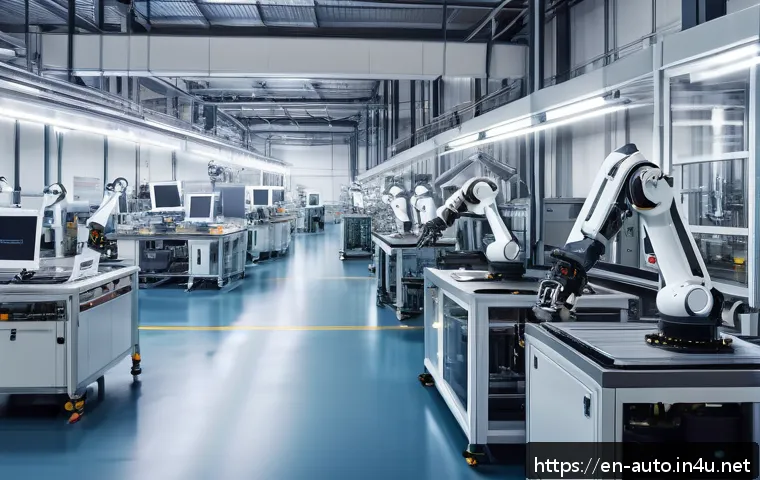
As industries rapidly embrace digital transformation, the landscape of industrial control systems is evolving like never before. Recent breakthroughs in automation, AI, and cybersecurity are reshaping how factories operate, making it crucial to stay ahead of these game-changing technologies.
If you’ve ever wondered what the future holds for industrial control, you’re in the right place. In this post, we’ll explore the most promising innovations that are not just trends but vital tools for staying competitive and secure.
Whether you’re an engineer, manager, or tech enthusiast, these insights will help you navigate the next wave of industrial evolution with confidence. Let’s dive into the technologies you simply can’t afford to ignore.
Revolutionizing Factory Automation with Intelligent Systems
Adaptive Control Algorithms Enhancing Process Efficiency
Industrial environments are no longer relying on static control methods. Adaptive control algorithms are becoming the cornerstone of modern automation, allowing systems to respond dynamically to varying operational conditions.
These algorithms constantly analyze sensor data and adjust parameters in real-time, improving process stability and reducing downtime. From chemical manufacturing to automotive assembly lines, the ability to self-tune control loops means higher yield and less waste.
In my experience working with these systems, the difference is striking—production lines that once required manual recalibration now run smoothly with minimal human intervention, freeing engineers to focus on innovation rather than troubleshooting.
Collaborative Robots Integrating Seamlessly with Human Operators
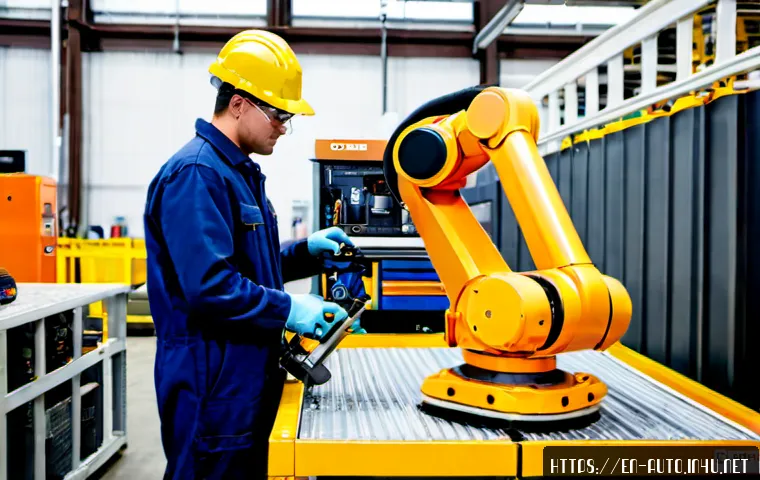
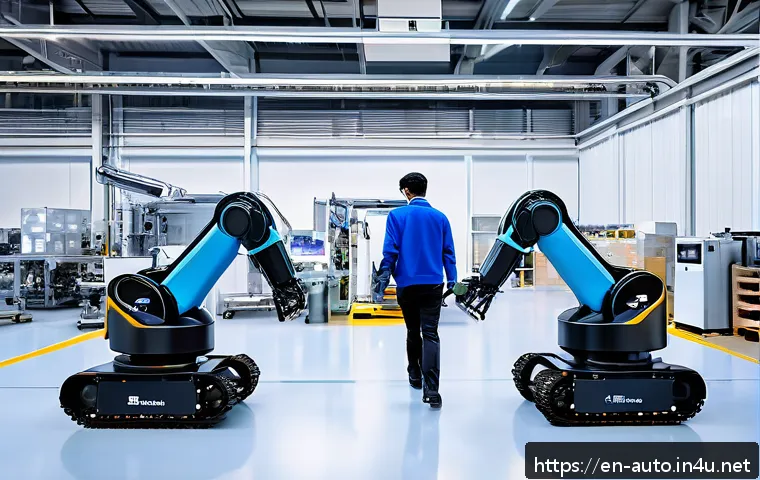
The rise of collaborative robots, or cobots, has transformed how tasks are shared between machines and humans on the factory floor. Unlike traditional industrial robots confined behind safety cages, cobots are designed to work side-by-side with people safely and efficiently.
These robots handle repetitive or ergonomically challenging jobs, reducing worker fatigue and injury risk. What’s particularly exciting is their intuitive programming interfaces; operators can train cobots through demonstration rather than complex coding.
I’ve seen teams adopt cobots quickly because they enhance productivity without requiring specialized robotics expertise, making automation more accessible across diverse industries.
Edge Computing: Bringing Smarter Decisions Closer to the Source
Edge computing is rapidly gaining traction as a way to process industrial data locally instead of sending everything to the cloud. This shift is crucial for time-sensitive applications where milliseconds matter, such as predictive maintenance and quality control.
By embedding intelligence near sensors and controllers, edge devices analyze data in real-time and trigger immediate actions without network delays. During a recent project, deploying edge nodes reduced system response time significantly, enabling faster detection of anomalies and preventing costly equipment failures.
The result? Not just improved safety but also substantial cost savings over centralized cloud-only architectures.
Securing Industrial Networks Against Emerging Threats
Zero Trust Architecture Tailored for Industrial Environments
Traditional security models that rely on perimeter defenses no longer suffice in complex industrial networks. Zero Trust Architecture (ZTA) is gaining ground as a robust approach, requiring strict identity verification for every device and user trying to access the system.
Unlike office IT environments, industrial control systems have unique constraints like legacy equipment and real-time operation demands. Successful implementation demands customized solutions that segment networks and continuously monitor traffic without disrupting critical processes.
I’ve noticed that plants adopting ZTA report fewer breaches and quicker incident responses, which builds confidence among operators managing sensitive infrastructure.
AI-Powered Threat Detection and Response
Artificial intelligence is revolutionizing cybersecurity by enabling proactive threat hunting and automated incident mitigation. Machine learning models trained on vast datasets can identify subtle anomalies in network behavior that humans might miss.
This capability is especially vital in industrial settings where cyberattacks can cause physical damage or safety hazards. From my observations, integrating AI-driven security platforms provides a double benefit: it enhances protection while reducing the burden on security teams overwhelmed by alert fatigue.
These systems continuously learn and adapt, making them a game-changer for defending critical assets.
Securing Legacy Systems Without Disruption
Many industrial operations still rely on legacy control systems that lack built-in security features, creating vulnerabilities that attackers can exploit.
Retrofitting security onto these systems is a delicate balancing act, as downtime or configuration errors can halt production. Practical approaches involve deploying network segmentation, protocol gateways, and anomaly detection layers that protect legacy devices without invasive changes.
I’ve worked with engineers who emphasize thorough testing and phased rollouts to ensure continuity. This strategy not only extends the life of existing assets but also strengthens the overall security posture.
Harnessing Data Analytics for Predictive and Prescriptive Maintenance
From Reactive to Predictive Maintenance: A Paradigm Shift
Gone are the days when maintenance teams waited for equipment failures to occur before taking action. Predictive maintenance leverages sensor data and analytics to forecast when a machine might fail, enabling proactive repairs.
This shift reduces unplanned downtime, lowers repair costs, and extends asset lifespan. In my experience, organizations adopting predictive models see a clear ROI within months, thanks to reduced emergency maintenance and optimized spare parts inventory.
The key is integrating reliable data sources and using advanced analytics to turn raw data into actionable insights.
Prescriptive Analytics Driving Smarter Decision-Making
While predictive maintenance tells you what might happen, prescriptive analytics goes a step further by recommending specific actions to prevent issues or optimize performance.
This level of insight requires combining machine learning with domain expertise to evaluate multiple scenarios and constraints. I’ve observed that prescriptive tools empower maintenance planners and operators to make data-driven decisions, balancing cost, risk, and operational goals more effectively.
For example, scheduling maintenance during planned downtime rather than disrupting production cycles leads to smoother operations and happier stakeholders.
Visualizing Complex Data for Better Understanding
The flood of data generated by modern control systems can be overwhelming without proper visualization tools. Dashboards that present key performance indicators, alerts, and historical trends in intuitive formats help teams grasp system health quickly.
Interactive visualization supports root cause analysis and continuous improvement efforts. When I worked alongside operators using enhanced visualization platforms, their ability to respond to anomalies improved dramatically, leading to faster troubleshooting and less guesswork.
Integrating AI and Machine Learning into Control Systems
Smart Process Optimization through Reinforcement Learning
Reinforcement learning, a branch of AI, enables control systems to learn optimal strategies by trial and error, improving performance over time without explicit programming.
This approach is particularly useful in complex processes with many variables and nonlinear behaviors. I’ve been involved in pilot projects where reinforcement learning algorithms adjusted control parameters to maximize yield while minimizing energy consumption, outperforming traditional rule-based systems.
The continuous improvement aspect of this technology makes it a powerful tool for factories striving for operational excellence.
AI-Assisted Fault Diagnosis and Root Cause Analysis
Diagnosing faults in industrial systems can be a complex puzzle involving multiple potential causes. AI helps by analyzing patterns across sensor readings, historical incidents, and maintenance records to pinpoint root causes faster than manual methods.
From personal experience, AI-assisted diagnosis reduces downtime by enabling maintenance teams to act confidently and swiftly. This capability also supports knowledge transfer, capturing expert insights in models that new staff can leverage, improving overall workforce effectiveness.
Challenges and Best Practices in AI Adoption
While AI offers tremendous benefits, integrating it into industrial control systems is not without challenges. Data quality, model interpretability, and system integration require careful attention.
I’ve learned that involving cross-functional teams early, including operators, IT, and data scientists, ensures solutions are practical and trusted. Pilot testing and incremental deployment help identify issues before full-scale rollout.
Clear communication about AI’s role and limitations fosters user acceptance, which is critical for long-term success.
Enhancing Connectivity with Industrial IoT and 5G
Expanding the Reach of Industrial IoT Devices
Industrial IoT (IIoT) has extended the capability of control systems by connecting a myriad of sensors, actuators, and devices to central management platforms.
This connectivity facilitates real-time monitoring, analytics, and remote control. In my recent projects, deploying IIoT solutions has enabled predictive maintenance and energy optimization with unprecedented granularity.
The challenge lies in managing the volume and variety of data, ensuring interoperability across diverse hardware and protocols.
5G Networks Powering Ultra-Reliable Low-Latency Communication
The rollout of 5G networks is a game-changer for industrial environments requiring fast, reliable, and secure wireless communication. Unlike previous generations, 5G supports massive device density and offers ultra-low latency, critical for real-time control applications like autonomous guided vehicles and robotic coordination.
I’ve witnessed pilot factories leveraging 5G to replace wired infrastructure, gaining flexibility and reducing installation costs. As 5G coverage expands, expect more widespread adoption and innovation in wireless control systems.
Balancing Connectivity and Security Risks
Increasing connectivity inevitably raises security concerns. Each connected device potentially expands the attack surface. A layered security approach that includes device authentication, encryption, and continuous monitoring is essential.
From my experience, organizations that integrate security from the design phase, rather than as an afterthought, achieve better protection without compromising performance.
Training personnel to recognize and respond to security incidents also plays a vital role in maintaining a secure connected environment.
Embracing Digital Twins for Real-Time Simulation and Optimization
Creating Accurate Virtual Models of Physical Assets
Digital twins replicate physical equipment and processes in a virtual environment, enabling real-time simulation, testing, and optimization without disrupting operations.
The fidelity of these models has improved dramatically with advancements in sensor technology and computational power. I’ve seen digital twins used effectively to plan maintenance, validate process changes, and train operators, reducing risk and accelerating decision-making.
Driving Continuous Improvement through Simulation
By running “what-if” scenarios on digital twins, engineers can explore the impact of different variables and identify optimal operating conditions. This proactive approach enables continuous improvement and innovation without trial-and-error on the actual production line.
In practice, teams utilizing digital twins report faster problem resolution and more confident change management, which translates directly into cost savings and enhanced product quality.
Integrating Digital Twins with AI and IoT
The true power of digital twins emerges when combined with AI analytics and IoT data streams. This integration creates a dynamic feedback loop where the virtual model learns from real-world conditions and adapts its predictions accordingly.
I’ve noticed that such integrated systems provide actionable insights that help prevent failures, optimize energy use, and improve supply chain responsiveness.
This synergy represents the future of smart manufacturing.
| Technology | Key Benefits | Challenges | Typical Use Cases |
|---|---|---|---|
| Adaptive Control Algorithms | Real-time process optimization, reduced downtime | Complex implementation, requires robust sensors | Chemical plants, automotive assembly |
| Collaborative Robots (Cobots) | Enhanced safety, reduced worker fatigue | Integration with human workflows | Material handling, assembly tasks |
| Edge Computing | Low latency processing, improved reliability | Hardware costs, managing distributed systems | Predictive maintenance, quality control |
| Zero Trust Security | Improved breach prevention, continuous monitoring | Legacy system compatibility | Critical infrastructure protection |
| AI-Powered Threat Detection | Proactive security, reduced alert fatigue | Data privacy, false positives | Cybersecurity in industrial networks |
| Predictive & Prescriptive Analytics | Reduced downtime, optimized maintenance | Data integration, model accuracy | Asset management, production optimization |
| Industrial IoT & 5G | Enhanced connectivity, real-time control | Security risks, network infrastructure | Remote monitoring, autonomous vehicles |
| Digital Twins | Virtual testing, continuous improvement | High-fidelity modeling, data integration | Process simulation, operator training |
Closing Thoughts
Intelligent systems are transforming factory automation by improving efficiency, safety, and decision-making. From adaptive algorithms to digital twins, these technologies empower industries to operate smarter and more resiliently. Embracing these innovations not only drives productivity but also prepares factories for the future of manufacturing.
Useful Information to Know
1. Adaptive control algorithms help optimize processes in real time, significantly reducing downtime and waste.
2. Collaborative robots improve workplace safety and productivity by working alongside human operators with intuitive programming.
3. Edge computing minimizes latency by processing data locally, essential for time-critical industrial applications.
4. Integrating AI-powered security enhances threat detection and response, protecting critical infrastructure more effectively.
5. Digital twins offer virtual modeling that supports simulation, optimization, and proactive maintenance strategies.
Key Takeaways
Successfully revolutionizing factory automation requires a balanced approach that combines advanced technologies with practical implementation strategies. Prioritizing data quality, security, and user involvement ensures smooth adoption and maximizes benefits. Continuous improvement through real-time analytics and AI integration will be essential for maintaining competitive advantage in an evolving industrial landscape.
Frequently Asked Questions (FAQ) 📖
Q: uestionsQ1: How is
A: I transforming industrial control systems today? A1: AI is revolutionizing industrial control by enabling predictive maintenance, real-time process optimization, and anomaly detection.
From my experience working with factories that implemented AI-driven monitoring, machines can now self-diagnose issues before they cause downtime, saving significant costs.
AI algorithms analyze massive data streams faster than any human, allowing operators to make smarter decisions instantly. This shift not only boosts productivity but also improves safety by spotting potential hazards early.
Q: What cybersecurity measures are essential for modern industrial control environments?
A: With increasing connectivity, robust cybersecurity is non-negotiable. Effective measures include network segmentation, multi-factor authentication, continuous monitoring, and regular patching of systems.
I’ve seen firsthand how a layered security approach dramatically reduces breach risks. Additionally, employee training on phishing and social engineering is crucial because even the best tech can fail if human error creeps in.
Investing in cybersecurity frameworks like IEC 62443 can provide a structured path to protecting your industrial assets.
Q: Which automation technologies should companies prioritize to stay competitive?
A: Companies should focus on integrating advanced robotics, IoT sensors, and edge computing. In my observations, automation that collects real-time data at the edge enables faster responses and less reliance on centralized control, which is a game changer for efficiency.
Collaborative robots (cobots) working alongside humans enhance flexibility and reduce repetitive strain. Prioritizing scalable and interoperable systems ensures future upgrades won’t disrupt operations, maintaining a competitive edge as technology evolves.