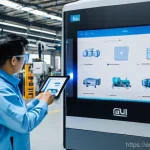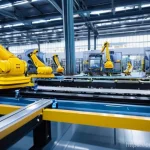
Stepping onto the factory floor today feels vastly different from even a decade ago. What was once a predictable realm of mechanics and relays has truly transformed into an intricate ballet of AI, robotics, and complex data streams.
As an engineer who’s lived through this monumental shift, I can tell you firsthand that the pace of innovation in factory automation is exhilarating, yet demands constant evolution from us.
I’ve personally witnessed how embracing new skills, especially in areas like predictive maintenance, industrial IoT cybersecurity, and digital twin technology, has become absolutely crucial for career longevity.
The traditional role of merely fixing machines is rapidly giving way to orchestrating intelligent, self-optimizing ecosystems. We’re no longer just problem-solvers; we’re innovators, ensuring uptime and efficiency through proactive, data-driven insights.
It’s a challenging, incredibly rewarding journey that requires us to continuously re-skill and adapt. The future for factory automation engineers isn’t just bright; it’s a dynamic landscape brimming with opportunities for those ready to lead the charge.
Let’s delve deeper into how you can strategically navigate and conquer this evolving career path.
Stepping onto the factory floor today feels vastly different from even a decade ago. What was once a predictable realm of mechanics and relays has truly transformed into an intricate ballet of AI, robotics, and complex data streams.
As an engineer who’s lived through this monumental shift, I can tell you firsthand that the pace of innovation in factory automation is exhilarating, yet demands constant evolution from us.
I’ve personally witnessed how embracing new skills, especially in areas like predictive maintenance, industrial IoT cybersecurity, and digital twin technology, has become absolutely crucial for career longevity.
The traditional role of merely fixing machines is rapidly giving way to orchestrating intelligent, self-optimizing ecosystems. We’re no longer just problem-solvers; we’re innovators, ensuring uptime and efficiency through proactive, data-driven insights.
It’s a challenging, incredibly rewarding journey that requires us to continuously re-skill and adapt. The future for factory automation engineers isn’t just bright; it’s a dynamic landscape brimming with opportunities for those ready to lead the charge.
Let’s delve deeper into how you can strategically navigate and conquer this evolving career path.
Mastering Predictive Maintenance and Advanced Analytics

In my early days, maintenance was a reactive game – something broke, we fixed it. That often meant costly downtime and missed production targets. But now, it’s all about foresight, isn’t it? The shift to predictive maintenance isn’t just a technological upgrade; it’s a fundamental change in how we ensure operational continuity and efficiency. We’re leveraging an insane amount of data from sensors, PLCs, and SCADA systems, feeding it into sophisticated analytics platforms to predict failures *before* they happen. I remember one plant where we reduced unplanned downtime by nearly 40% just by implementing a robust predictive maintenance strategy for a critical assembly line. It felt like magic, but it was just smart engineering and data science working together.
1. Data-Driven Diagnostics and Prognostics
This isn’t about guesswork anymore. We’re talking about real-time data streams that tell us the story of a machine’s health. I’ve spent countless hours sifting through vibration analysis reports and thermal imaging, but now, AI algorithms do the heavy lifting, spotting anomalies that my human eyes might miss. It’s like having a team of hyper-intelligent diagnosticians working 24/7. Understanding statistical process control and machine learning models for anomaly detection is no longer just for data scientists; it’s becoming a core competency for us on the floor. It’s about not just seeing the data, but interpreting its whispers of potential issues before they roar into a full-blown crisis.
2. Implementing Condition Monitoring Systems
Deploying and integrating advanced sensors – think accelerometers, acoustic sensors, temperature probes – into legacy and modern equipment is a crucial first step. But it doesn’t stop there. The real skill lies in selecting the right sensors for the right assets, ensuring data integrity, and then configuring the condition monitoring software to provide actionable insights. I’ve seen projects fail because the data was noisy or irrelevant, leading to alert fatigue. It requires a deep understanding of both the physical assets and the digital infrastructure that supports them. Getting this right means you’re not just an engineer; you’re an architect of reliability.
Navigating the Industrial IoT Cybersecurity Frontier
When I first started, factory networks were isolated, almost quaint in their simplicity. Now, with IIoT, everything is connected – machines talking to each other, to the cloud, to enterprise systems. It’s brilliant for efficiency, but it’s also a terrifyingly open door for cyber threats. I’ve been involved in incident responses where a single vulnerable device could have brought an entire production line to its knees. The stakes are incredibly high, and honestly, it keeps me up at night sometimes. Protecting these interconnected systems is paramount, and it’s a skillset that’s becoming as vital as understanding hydraulics or pneumatics.
1. Fortifying Operational Technology (OT) Networks
Traditional IT security isn’t enough; we need to understand the unique vulnerabilities of operational technology (OT) and industrial control systems (ICS). This means segmenting networks, implementing robust firewalls, and, crucially, understanding protocols like Modbus, Profinet, and OPC UA from a security perspective. I’ve learned the hard way that a single misconfigured PLC can be an open invitation for a malicious actor. It’s about building layers of defense, constantly patching systems, and educating everyone on the floor about potential threats. My personal experience has shown me that the human element is often the weakest link, so training is critical.
2. Threat Detection and Incident Response in Industrial Environments
It’s not just about prevention; it’s about detection and rapid response. We need to be able to identify unusual network traffic, unauthorized access attempts, or strange machine behavior that could signal a breach. Developing incident response plans tailored to an industrial setting – considering safety, production continuity, and intellectual property – is a massive undertaking. I’ve participated in countless drills, simulating everything from ransomware attacks to insider threats. It’s a constant cat-and-mouse game, and staying ahead requires continuous learning and a healthy dose of paranoia, honestly.
Harnessing Digital Twin Technology for Real-World Impact
Remember when we had to physically shut down a line for testing new processes or modifications? It was disruptive, costly, and risky. Digital twins have completely revolutionized that. We can now create a virtual replica of an entire factory, a single machine, or even a specific process, and simulate changes, test new configurations, and optimize operations without touching the physical world. I’ve seen engineers experiment with different robot paths or assembly sequences in a digital twin, refine them, and then seamlessly deploy them to the real line, saving weeks of trial-and-error. It’s truly amazing to see these virtual models come to life and deliver tangible benefits.
1. Building and Simulating Virtual Factory Environments
This isn’t just about 3D modeling; it’s about creating a living, breathing virtual counterpart that mirrors real-time data and behavior. We’re talking about integrating CAD models with operational data, leveraging simulation software, and understanding physics-based modeling. It’s a complex undertaking that requires strong collaboration between mechanical, electrical, and software engineers. My biggest learning curve here was understanding how to validate the digital twin against the real-world system, ensuring its fidelity so that the insights gained are truly reliable and actionable.
2. Optimizing Processes and Predicting Performance
Once you have a reliable digital twin, the possibilities are endless. I’ve used them to optimize energy consumption by simulating different operational schedules, to predict the lifespan of critical components under various loads, and even to train new operators in a risk-free virtual environment. It’s like having a crystal ball for your factory. The ability to run “what-if” scenarios instantly is a game-changer for throughput optimization, quality control, and even new product introduction. It’s incredibly satisfying to see a simulated improvement translate directly into real-world gains on the factory floor.
Embracing AI and Machine Learning for Operational Excellence
AI and machine learning used to feel like something out of a sci-fi movie when I first started in this field. Now, they’re becoming as commonplace as a PLC. We’re moving beyond just automation to true autonomy and intelligence in our factory systems. I’ve personally been part of projects where AI-powered vision systems are detecting minuscule defects faster and more consistently than any human inspector could, or where ML algorithms are dynamically adjusting machine parameters to maintain optimal quality despite fluctuating input conditions. It’s not just about doing things faster; it’s about doing them smarter and with unprecedented precision.
1. Implementing AI-Powered Quality Control and Vision Systems
Imagine a camera system that can learn to identify complex defects on a rapidly moving assembly line with near-perfect accuracy. That’s the power of AI in quality control. My team recently deployed a system that used deep learning to inspect intricate electronic components, drastically reducing rejects and improving overall product integrity. The initial training phase was intense, requiring massive datasets and meticulous labeling, but the long-term benefits in terms of cost savings and brand reputation were undeniable. This requires a shift in mindset – moving from rule-based programming to data-driven learning and continuous model improvement.
2. Leveraging Machine Learning for Process Optimization and Robotics
Beyond quality, ML is transforming how we optimize entire manufacturing processes. From optimizing energy usage in an HVAC system to dynamically adjusting robot paths for maximum efficiency, these algorithms are finding patterns and making decisions that are incredibly complex for humans to discern. I’ve been fascinated by how collaborative robots, combined with ML, can learn from human operators and adapt to changing tasks, blurring the lines between human and machine labor in a truly collaborative way. It’s a continuous learning curve, but incredibly exciting.
Cultivating Soft Skills for Leadership and Collaboration
When I was a junior engineer, my world was purely technical. Code, schematics, circuits – that was it. But as I’ve grown in my career, I’ve realized that the most innovative projects, the ones that truly transform a factory, aren’t just about the technology. They’re about people. Leading a complex automation project means not just understanding the latest sensor tech, but also being able to communicate with operators, justify investments to management, and collaborate with diverse teams – from IT to production to sales. The shift from a purely technical role to one that demands strong interpersonal skills has been one of the most profound changes in my professional journey.
1. Effective Communication and Stakeholder Management
It’s not enough to design brilliant systems; you have to articulate their value, explain complex concepts to non-technical audiences, and manage expectations. I remember a particularly challenging project where I had to convince a very traditional production team to adopt a new, highly automated sorting system. It wasn’t about the tech specs; it was about addressing their fears, showing them the benefits, and involving them in the process. Building trust and maintaining open lines of communication with everyone, from the CEO to the shop floor technician, is absolutely critical for successful implementation and adoption.
2. Problem-Solving, Adaptability, and Continuous Learning
The factory floor is a dynamic environment, full of unexpected challenges. Being able to quickly diagnose problems, think critically under pressure, and adapt your solutions to real-world constraints is a hallmark of a truly effective engineer. But beyond that, the pace of technological change means that continuous learning isn’t just a buzzword; it’s a survival strategy. I make it a point to dedicate time each week to online courses, industry webinars, and reading academic papers. The moment you stop learning in this field is the moment you start falling behind. It’s an exhilarating, lifelong journey of discovery.
Strategic Reskilling: Investing in Your Future
The landscape of factory automation is shifting so rapidly that if you don’t actively re-skill, you risk becoming obsolete. I’ve seen it happen. Engineers who were once experts in legacy systems found themselves struggling to keep up with cloud-based platforms and AI tools. It’s a stark reminder that our education doesn’t end with a degree; it’s a continuous, deliberate process. For me, investing in new certifications and online courses has been the single most impactful decision for my career longevity, opening doors to projects I never thought I’d touch.
1. Identifying High-Demand Skills and Knowledge Gaps
The first step is honest self-assessment. What are the emerging trends? Where are the talent gaps in the industry? For me, it was clear that data analytics, cloud computing for industrial applications, and advanced robotics programming were becoming essential. I regularly scour job descriptions, industry reports, and even university course catalogs to understand where the puck is going. It’s about being proactive, not reactive, in shaping your skill set. This table provides a quick look at how the shift is impacting key roles:
| Traditional Skill Focus | Emerging Skill Focus | Impact on Career |
|---|---|---|
| PLC/SCADA Programming | IoT Platform Integration, Cloud Data Management | Transition from control to data orchestration. |
| Mechanical Troubleshooting | Predictive Analytics, AI Diagnostics | From reactive repair to proactive maintenance. |
| Physical Security | OT Cybersecurity, Network Segmentation | Expanding scope from physical to cyber defense. |
| Manual System Optimization | Digital Twin Simulation, AI/ML Optimization | Leveraging virtual environments for efficiency. |
2. Leveraging Online Platforms and Industry Certifications
The beauty of today’s world is the accessibility of learning. Platforms like Coursera, edX, and industry-specific training academies offer incredible courses on everything from Python for data science to advanced robotics. I’ve personally earned several certifications that directly led to new project opportunities and promotions. Don’t underestimate the value of industry certifications from organizations like ISA (International Society of Automation) or specific vendor certifications (e.g., Siemens, Rockwell). They signal to employers that you’re not just curious, but genuinely committed to mastering new domains. It’s about strategic upskilling, one course at a time, building a robust profile that screams ‘future-proof’.
The Entrepreneurial Engineer: Innovation Beyond the Assembly Line
As automation engineers, we are inherently problem-solvers and innovators. But the modern landscape offers opportunities beyond just optimizing existing lines. I’ve seen colleagues transition from traditional roles to founding their own automation consulting firms, developing niche software solutions, or even patenting new sensor technologies. The deep understanding of manufacturing processes and emerging technologies we possess positions us uniquely to identify unmet needs and create value in entirely new ways. It’s about looking at the factory floor not just as a place of work, but as a fertile ground for entrepreneurial ventures and groundbreaking innovation.
1. Identifying Market Needs and Niche Opportunities
Our daily exposure to the challenges and inefficiencies within manufacturing gives us an invaluable perspective. I’ve often found myself thinking, “There *has* to be a better way to do this,” and sometimes, that thought germinates into a viable business idea. It could be a new predictive maintenance algorithm, a specialized cybersecurity solution for legacy OT systems, or even a novel approach to human-robot collaboration. The key is to keenly observe, listen to pain points, and then leverage your technical expertise to conceive solutions that fill those gaps. It’s about having an entrepreneurial eye, even if you remain within a large corporation.
2. Building a Personal Brand and Industry Network
Whether you’re looking to start your own venture or simply become a highly sought-after expert, building a strong personal brand is essential. This means actively participating in industry forums, speaking at conferences, publishing articles, and networking with peers and thought leaders. My own journey as a blogger and speaker has opened countless doors, connecting me with incredible minds and unexpected opportunities. It’s about sharing your expertise, demonstrating your passion, and positioning yourself as a trusted authority in this ever-evolving field. The connections you make, and the reputation you build, can be just as valuable as any technical skill.
Concluding Thoughts
Stepping back and looking at the vast, interconnected world of factory automation, it’s clear we’re not just working with machines; we’re shaping the future of industry itself. This field, while incredibly demanding, offers an unparalleled opportunity to innovate, solve complex problems, and truly make a tangible impact on efficiency and productivity. My own journey through these shifts has been an exhilarating one, filled with constant learning and the immense satisfaction of seeing smart solutions come to life on the factory floor. So, if you’re an engineer looking for a career that’s perpetually challenging, deeply rewarding, and at the absolute forefront of technological advancement, you’ve found your calling.
Useful Information to Know
1. Invest in cross-disciplinary learning: The lines between IT (Information Technology) and OT (Operational Technology) are blurring faster than ever. A strong foundation in both, especially in areas like industrial networking, cloud data management, and cybersecurity, will make you an indispensable asset.
2. Seek hands-on experience: While theoretical knowledge is crucial, there’s no substitute for practical application. Look for internships, join volunteer projects, or even set up small-scale automation experiments at home. These experiences solidify understanding and build a powerful portfolio.
3. Network relentlessly: Attend industry conferences, join professional organizations like ISA (International Society of Automation) or SME (Society of Manufacturing Engineers), and actively connect with peers and thought leaders on platforms like LinkedIn. Your network can open doors to unforeseen opportunities and invaluable mentorship.
4. Stay curious and proactive: The pace of change in factory automation is relentless. Subscribe to leading industry newsletters, follow key researchers and companies, and don’t be afraid to experiment with new tools or software on your own. The future belongs to those who anticipate change, not just react to it.
5. Develop strong communication skills: Being able to translate complex technical concepts into understandable insights for non-technical stakeholders – from production managers to C-suite executives – is paramount. Effective communication drives adoption, secures buy-in, and ensures project success.
Key Takeaways
The factory automation landscape is undergoing a monumental transformation, driven by technologies like AI, IoT, Digital Twins, and advanced robotics. For engineers, this signifies a profound shift from merely reactive troubleshooting to proactive, data-driven innovation, where understanding complex ecosystems is paramount.
Continuous re-skilling in high-demand areas such as predictive maintenance, OT cybersecurity, industrial cloud integration, and machine learning application is not just an advantage, but an absolute necessity for career longevity and growth. Leverage online learning platforms and industry certifications strategically to future-proof your skill set.
Beyond technical prowess, cultivating strong soft skills – including effective communication, adaptability, critical problem-solving, and an entrepreneurial mindset – is equally crucial. These interpersonal capabilities are vital for leading complex projects, collaborating with diverse teams, and identifying entirely new opportunities within this exciting and rapidly evolving field.
Frequently Asked Questions (FAQ) 📖
Q: You mentioned constant evolution and crucial new skills. From your firsthand experience, which specific areas should factory automation engineers prioritize right now to truly thrive, not just survive?
A: Oh, this is the million-dollar question, isn’t it? If I had to pick three, based on what I see making a real impact on the floor every single day, it’s definitely predictive maintenance, industrial IoT (IIoT) cybersecurity, and mastering digital twin technology.
It’s not just about knowing them; it’s about living them. For predictive maintenance, think about the peace of mind – and massive cost savings – when a sensor alerts you that a critical bearing on a production line motor is about to fail, before it grinds everything to a halt.
We’re talking hours, even days, of warning! That’s gold. IIoT cybersecurity?
Essential. Imagine your entire smart factory network, all those connected sensors and robots, being a backdoor for a malicious actor. It keeps me up at night sometimes, so understanding how to secure these sprawling networks is non-negotiable.
And digital twins – this is where the magic happens for efficiency. It’s like having a living, breathing virtual replica of your factory, where you can simulate changes, test new processes, or even predict bottlenecks without ever touching the real equipment.
It’s not just a fancy tool; it’s a strategic advantage, allowing us to make decisions with incredible precision and foresight. These aren’t just buzzwords; they’re the bedrock of a resilient and efficient modern factory.
Q: The text highlights a significant shift in the engineer’s role. Can you elaborate on how the daily life and primary responsibilities of a factory automation engineer have fundamentally changed compared to, say, ten years ago, and what’s the biggest difference you personally feel?
A: Absolutely. Ten years ago, my day might have been a lot of hands-on troubleshooting – fixing a broken relay here, recalibrating a misaligned sensor there.
It was reactive, a constant scramble to get things back online. Now? My focus has dramatically shifted from fixing to orchestrating.
It’s less about the wrench and more about the dashboard. I’m poring over data analytics, looking for patterns, anticipating issues, and optimizing entire production flows.
The biggest difference I feel is this immense sense of proactive control. Instead of waiting for a machine to scream for help, we’re building intelligent ecosystems that whisper potential problems long before they become emergencies.
We’re no longer just problem-solvers in the traditional sense; we’re essentially data detectives and system architects. It’s like being the conductor of a massive, intricate orchestra where every instrument – every robot arm, every conveyor belt, every AI algorithm – needs to play in perfect harmony.
It’s incredibly mentally stimulating, moving from isolated incidents to holistic system health.
Q: Given this dynamic landscape, for someone just starting their career or looking to transition into factory automation, what practical advice would you offer to ensure they’re not just ready for the future, but can actively lead the charge?
A: Oh, this is exciting! For anyone stepping into this arena, or even a seasoned pro looking to pivot, my number one piece of advice is: embrace continuous learning like it’s your daily bread.
Seriously, complacency is the enemy here. Don’t just wait for your company to offer a training course. Be relentlessly curious!
Spend your evenings digging into online courses on Python for industrial applications, or understanding OPC UA protocols, or even tinkering with a Raspberry Pi to simulate an IoT device at home.
Get hands-on experience, even if it’s in a personal project. Networking is also huge – connect with other engineers, join industry forums, attend virtual conferences.
Hear what challenges others are tackling and what solutions are emerging. And critically, cultivate a problem-solving mindset that goes beyond simple repairs.
Think about system optimization, data-driven decision-making, and how every piece fits into the larger, intelligent ecosystem. It’s not just about technical skills; it’s about a mindset of innovation and adaptability.
If you can walk onto that factory floor with genuine curiosity and a drive to constantly learn and apply, you’re not just ready, you’re already leading.
It’s a career path that truly rewards those who dare to evolve.
📚 References
Wikipedia Encyclopedia
구글 검색 결과
구글 검색 결과
구글 검색 결과
구글 검색 결과
구글 검색 결과