Hey everyone, welcome back to the blog! If you’re anything like me, you’ve probably felt that electrifying buzz in the air lately, a sense that the future of work isn’t just coming, it’s already here, transforming industries faster than we can blink.
We’re living through an incredible era where technology isn’t just a tool, it’s the very foundation of innovation, and for savvy professionals, this shift presents unparalleled opportunities.
I’ve been diving deep into what’s next, and one area that truly stands out is the incredible boom in automation, pushing the boundaries of what’s possible in manufacturing and beyond.
It’s not just about robots anymore; we’re talking about sophisticated AI, machine learning, and interconnected systems that are reshaping entire career paths.
Now, if you’ve been pondering a career move or are simply curious about where the real action is, you’re in the right place. Factory Automation Engineering, for instance, is a field that’s absolutely exploding with potential, offering dynamic challenges and robust growth for those willing to adapt.
I’ve personally seen friends and colleagues make the leap, and the common thread is always the same: a hunger to be at the forefront of technological advancement.
Whether you’re an experienced engineer looking for a fresh challenge, or someone from a completely different background contemplating a pivot, navigating this transition can feel like a massive undertaking.
But trust me, it’s entirely achievable with the right strategy and insights. Let’s get into the specifics of how you can successfully prepare for a fulfilling career as a Factory Automation Engineer!
Decoding the Automation Revolution: A Look Inside Modern Factories

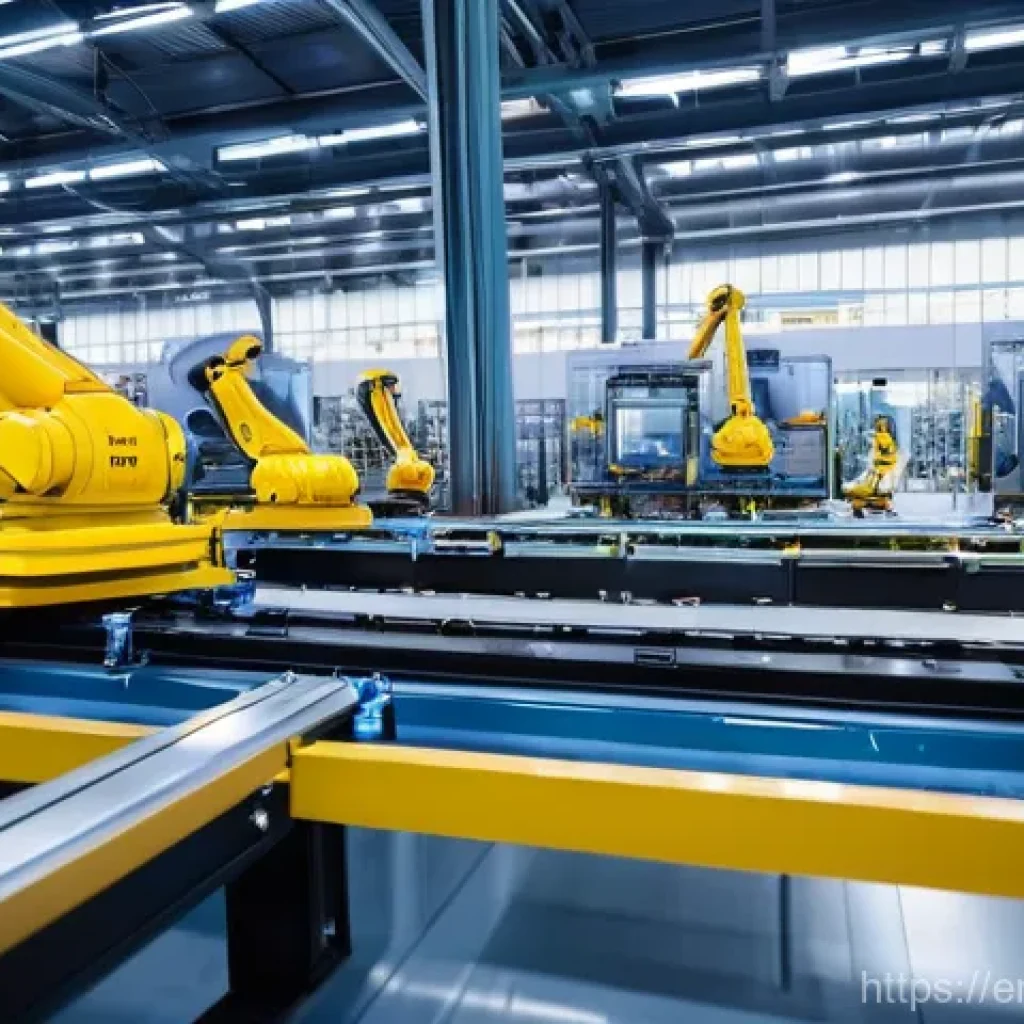
Honestly, when I first heard “factory automation,” my mind immediately conjured up images from old sci-fi movies – clunky robots doing repetitive tasks. But let me tell you, stepping into a modern automated facility is like entering a completely different world! It’s less about simple mechanization and much more about intricate ecosystems of smart machines, AI-driven insights, and seamless data flow. What was once a collection of isolated machines is now a connected symphony of technology working in harmony. I’ve seen firsthand how these systems dramatically boost efficiency, reduce waste, and create safer working environments, making the human element even more focused on innovation and oversight. It’s an exciting time to be part of this transformation, witnessing industries reshape themselves at an incredible pace, and it truly makes you appreciate the ingenuity behind it all.
The Shift from Manual to Smart Operations
The days of purely manual assembly lines are rapidly becoming a thing of the past. Today’s factories are integrating sophisticated sensors, machine vision, and real-time data analytics to optimize every single step of the production process. From predictive maintenance that anticipates equipment failures before they happen, to quality control systems that detect microscopic flaws, the level of intelligence embedded in these operations is astounding. I remember visiting a car manufacturing plant a few years ago and being absolutely mesmerized by how robots could perform welding with such precision and speed, a task that once required immense human effort and posed significant safety risks. This shift isn’t about replacing people wholesale; it’s about empowering workforces to focus on higher-value tasks, creativity, and problem-solving, rather than repetitive physical labor. It truly elevates the entire operational paradigm.
More Than Just Robots: The Tech Stack Defined
When we talk about factory automation, it’s not just about the shiny robotic arms we often see in videos. It’s a complex blend of technologies that forms an incredibly robust tech stack. We’re talking about Programmable Logic Controllers (PLCs) and Distributed Control Systems (DCS) that act as the brains of the operation, SCADA (Supervisory Control and Data Acquisition) systems that provide a bird’s-eye view, and Manufacturing Execution Systems (MES) that manage production flow. Then there’s the burgeoning field of Industrial Internet of Things (IIoT), connecting devices and gathering vast amounts of data, alongside artificial intelligence and machine learning algorithms that analyze this data for optimization. I’ve found that understanding this interconnectedness, rather than just focusing on individual components, is what truly sets a successful automation engineer apart. It’s like being a conductor of an incredibly complex orchestra, ensuring every instrument plays its part perfectly.
Building Your Technical Toolkit: Must-Have Skills for Success
Alright, let’s get down to the brass tacks: what do you actually need to *know* to thrive in this field? From my own observations and conversations with seasoned pros, it’s clear that a solid technical foundation is non-negotiable. But it’s not just about memorizing theories; it’s about practical application and a genuine curiosity to understand how things work under the hood. I’ve personally seen candidates with a strong grasp of these core skills quickly become indispensable members of their teams. It’s a field where continuous learning isn’t just a buzzword; it’s an absolute necessity, and building a versatile skill set from the get-go is your best bet for a fulfilling and dynamic career path.
Mastering PLCs and Industrial Controls
If you’re serious about factory automation, getting cozy with PLCs is like learning the alphabet before you write a novel. These are the workhorses of industrial control, executing commands and ensuring machines operate precisely as intended. You’ll need to understand ladder logic, function block diagrams, and structured text – the languages they speak. It’s not just about programming them, though; it’s about troubleshooting, calibrating, and optimizing them to meet production demands. I remember my first hands-on experience with a PLC, trying to get a simple conveyor belt to start and stop. It felt incredibly challenging at first, but the satisfaction of seeing it work, knowing I had commanded a piece of machinery, was immensely rewarding. Brands like Siemens, Allen-Bradley, and Mitsubishi are industry giants, so familiarizing yourself with their platforms will give you a significant advantage. It’s a foundational skill that will serve you well, no matter which corner of automation you end up specializing in.
The Power of Programming Languages
Beyond PLCs, a strong command of certain programming languages will truly open doors for you. Python, for instance, is rapidly becoming a favorite for data analysis, machine learning applications, and scripting within automation environments. C++ is still incredibly relevant for high-performance computing and embedded systems, especially in robotics. Knowing your way around SQL is crucial for managing databases that store all that valuable factory data. I’ve found that even a basic understanding of these languages can empower you to do so much more than just operate existing systems – you can innovate, customize, and build entirely new solutions. It’s about being able to communicate with different layers of the automation stack, making you a more versatile and valuable asset to any team.
Embracing Data and Analytics
In today’s hyper-connected factories, data is king. Every sensor, every machine, every process generates a constant stream of information. An automation engineer who can not only collect this data but also interpret it, derive insights, and use it to improve efficiency is absolutely invaluable. This means understanding concepts like statistical process control, predictive analytics, and even dabbling in machine learning to identify patterns and anomalies. I’ve witnessed companies make incredible leaps in productivity simply by leveraging their operational data effectively. It’s not just about preventing breakdowns anymore; it’s about continuous optimization and finding those marginal gains that add up to significant savings and performance boosts. If you can make sense of the data, you’ll be the person everyone turns to for answers.
| Skill Category | Key Competencies | Why It Matters |
|---|---|---|
| Core Technical Skills | PLC Programming (Ladder Logic, Structured Text), HMI/SCADA Development, Industrial Network Protocols (Ethernet/IP, Profinet), Robotics Programming, Sensor Integration | These are the foundational “hands-on” skills for designing, implementing, and maintaining automated systems. Without them, you can’t build or fix anything. |
| Programming & Software | Python (for data analysis, AI), C++ (for real-time systems, robotics), SQL (for database management), Familiarity with cloud platforms (AWS, Azure) | Enables advanced system development, data-driven optimization, and integration with broader IT infrastructure. Essential for future-proofing your career. |
| Data & Analytics | Statistical Process Control (SPC), Predictive Maintenance, Machine Learning Fundamentals, Data Visualization, Root Cause Analysis | Transforms raw data into actionable insights, leading to improved efficiency, reduced downtime, and proactive problem-solving. |
| Soft Skills | Problem-Solving, Critical Thinking, Communication (technical & non-technical), Teamwork, Adaptability, Project Management Basics | Crucial for collaborating with diverse teams, effectively conveying complex ideas, and navigating unexpected challenges in dynamic environments. |
Navigating the Career Landscape: Finding Your Niche
Once you’ve got your skills sharpened, the next big question is, “Where do I apply them?” The beauty of factory automation engineering is its sheer breadth. It’s not just one industry; it permeates nearly every sector imaginable, offering a rich tapestry of career paths. This diversity can be a bit overwhelming at first, but it also means there’s a perfect fit out there for almost anyone. I’ve seen colleagues jump from automotive to pharmaceuticals, from food and beverage to renewable energy, all leveraging their core automation expertise. It really boils down to understanding where your specific interests and strengths align with industry needs, and then strategically positioning yourself to land that dream role.
Identifying High-Demand Industries
So, where’s the action truly happening? Manufacturing, of course, is a massive umbrella, but within that, certain sectors are experiencing explosive growth in automation. Think automotive, with its complex assembly lines and push for electric vehicles. Pharmaceuticals and biotech are heavily reliant on precision automation for production and quality control. The food and beverage industry uses automation for everything from packaging to quality sorting. And don’t forget logistics and warehousing, where robotic solutions are redefining supply chain efficiency. Even agriculture is seeing a rise in automated systems! I suggest doing some digging into industries that genuinely pique your interest. If you’re passionate about sustainable energy, look into automation roles in solar panel manufacturing or wind turbine maintenance. Your passion will not only make the job more enjoyable but also drive your desire to excel.
Networking and Professional Development
In any field, but especially in one as interconnected as automation, who you know can be almost as important as what you know. Attending industry conferences, joining professional organizations like ISA (International Society of Automation) or IEEE, and participating in online forums are fantastic ways to build your network. I can’t stress enough how many valuable insights and even job opportunities have come my way through casual conversations at industry events or LinkedIn connections. Beyond networking, continuous professional development is key. Look for certifications that demonstrate specialized knowledge – maybe in a specific PLC brand, robotics platform, or cybersecurity for industrial control systems. These not only boost your resume but also ensure your skills remain cutting-edge in an ever-evolving technological landscape. Never stop learning; it’s the best investment you can make in your career.
Beyond the Technical: Soft Skills That Elevate Your Career
While the technical chops are undeniably crucial, I’ve learned firsthand that they only tell half the story. The most successful automation engineers I’ve met, the ones who truly make an impact and move up the ladder, are those who also possess a robust set of soft skills. These are the abilities that allow you to effectively collaborate, communicate, and lead, transforming you from a great technician into an indispensable team player and innovator. It’s about being able to articulate complex technical issues to non-technical stakeholders, guiding a team through a tricky problem, or simply being adaptable when the unexpected inevitably happens. Trust me, overlooking these “human” elements would be a huge mistake; they are the grease that keeps the highly technical gears of a project running smoothly.
Problem-Solving Prowess and Critical Thinking

Let’s be real: things go wrong. Machines break, code has bugs, and systems sometimes just don’t behave as they should. This is where your problem-solving abilities truly shine. An automation engineer isn’t just about implementing solutions; it’s about diagnosing issues, often under pressure, and coming up with creative, efficient fixes. This requires a strong sense of critical thinking – being able to break down a complex problem into manageable parts, analyze potential causes, and systematically test solutions. I recall a time when an entire production line went down due to a seemingly obscure sensor issue, and it was the engineer who methodically went through every possibility, rather than jumping to conclusions, who ultimately saved the day. That kind of clear-headed, logical approach is absolutely invaluable in this field.
Communication is Key: Bridging the Gap
You can be the most brilliant programmer or the most insightful troubleshooter, but if you can’t communicate your ideas effectively, your impact will be limited. Automation engineers often work with diverse teams – production managers, mechanical engineers, IT specialists, and even sales teams. Being able to explain intricate technical concepts in a clear, concise manner that resonates with your audience is a superpower. Whether it’s writing thorough documentation, leading a training session, or simply explaining a system’s limitations to a non-technical manager, strong verbal and written communication skills are essential. I’ve seen projects falter not because of technical failures, but because of miscommunication between different departments. Cultivating this skill means you can bridge gaps and ensure everyone is on the same page, driving projects forward seamlessly.
Charting Your Financial Future: Earning Potential and Growth
Let’s talk numbers because, let’s be honest, a fulfilling career also needs to be a financially rewarding one! The good news is that Factory Automation Engineering is a high-demand, specialized field, which typically translates into very competitive salaries and excellent long-term growth prospects. It’s not just a job; it’s an investment in your future. I’ve heard countless stories from friends who’ve seen their earning potential steadily climb as they gain experience and specialize, which is incredibly motivating. While exact figures always vary based on location, experience, and specialization, the overall trajectory for this profession is decidedly upward, reflecting the critical role automation plays in modern industry.
Understanding Salary Expectations
Starting salaries for entry-level automation engineers in places like the United States typically range from $60,000 to $80,000 annually. With a few years of experience, say 3-5 years, that figure can easily jump into the $80,000 to $100,000 range. Senior or principal engineers, especially those with niche expertise in robotics, AI, or specific industrial control systems, can command salaries well over $120,000, sometimes even reaching $150,000 or more, particularly in high-cost-of-living areas or specialized industries. Of course, factors like your degree, additional certifications, and the size and type of company also play a significant role. Don’t be afraid to research salary benchmarks for your specific region and experience level, and always remember to factor in benefits packages, which can add substantial value to your total compensation.
Long-Term Career Progression
One of the most attractive aspects of a career in factory automation is the clear path for progression. You don’t just get stuck in one role. Many start as junior automation engineers, moving up to mid-level and then senior positions as they gain experience and take on more complex projects. From there, you might transition into a lead engineer role, managing teams and entire automation initiatives. Some choose to specialize further, becoming experts in industrial cybersecurity, advanced robotics, or AI integration. Others move into project management, consulting, or even sales engineering, leveraging their technical knowledge to guide clients. The continuous evolution of technology in this space also means there are always new areas to explore and master, ensuring your career remains dynamic and engaging for decades to come. It’s a field where you can truly build a legacy.
Making the Leap: Practical Steps to Transition
Feeling inspired? That’s fantastic! Now comes the exciting part: putting a plan into action. Making a career transition, especially into a technical field, can feel like a massive undertaking, but I promise it’s entirely achievable with a structured approach. Think of it less as a giant leap and more as a series of well-calculated steps. From refining your foundational knowledge to gaining practical experience, every effort you put in now will pay dividends down the road. I’ve guided countless individuals who were once hesitant to make this pivot, and seeing them flourish in their new roles as automation engineers has been incredibly rewarding. Let’s map out how you can successfully navigate this journey and land your dream job.
Education and Certifications: What Matters Most
While a four-year degree in electrical engineering, mechanical engineering, or computer science is often preferred, it’s not always the only path. Many successful automation engineers come from technical schools with specialized associate degrees or have transitioned from related trades after completing focused certifications. Look into programs that offer hands-on training with PLCs, HMI development, and industrial networking. Certifications from major automation vendors like Siemens (e.g., SIMATIC PCS 7) or Rockwell Automation (e.g., ControlLogix) are highly regarded and demonstrate practical expertise. Online courses from platforms like Coursera, Udemy, or edX can also provide excellent foundational knowledge. The key here is practical, demonstrable skills rather than just theoretical understanding. Companies want to see that you can actually *do* the job.
Gaining Hands-On Experience
This is arguably the most crucial piece of the puzzle. Employers want to see that you’ve got real-world experience. If you’re currently in a different field, look for opportunities to automate processes within your existing role, even if it’s something small. Build personal projects: create a small home automation system, experiment with Arduino or Raspberry Pi to control simple devices, or get your hands on an inexpensive PLC trainer kit. Internships, even unpaid ones, can be invaluable for gaining exposure to industrial environments. Volunteer for local community projects that involve any form of technical system building. The goal is to build a portfolio of work that you can discuss in interviews and demonstrate your problem-solving abilities. Every little bit of practical experience adds up and boosts your confidence, showing potential employers that you’re not just talk, but you’re ready to dive in and contribute from day one.
Wrapping Things Up
Whew, we’ve covered a lot of ground today, haven’t we? It’s truly thrilling to see how rapidly the world of factory automation is evolving, creating so many incredible opportunities for those ready to dive in. From intricate robotic systems to the power of data analytics, this field truly is at the cutting edge of industrial innovation. If you’ve been on the fence about pursuing a career here, I genuinely hope this post has given you the clarity and confidence to take that leap. Remember, it’s a journey that combines rigorous technical challenges with immense creative potential, and one that consistently rewards those with a passion for problem-solving and a hunger for continuous learning. The future is automated, and you can absolutely be a part of shaping it!
Useful Information to Keep in Mind
1. Continuous Learning is Your Superpower: Technology in automation moves fast. Make it a habit to stay updated with new software, hardware, and industry standards. Follow blogs, attend webinars, and never stop experimenting. This isn’t a field where you can learn once and be set for life; it’s a dynamic, exciting marathon!
2. Network, Network, Network: The automation community is vibrant and incredibly supportive. Join online forums, connect with professionals on LinkedIn, and if possible, attend local meetups or industry conferences. You’ll gain invaluable insights, find mentors, and potentially discover your next big opportunity.
3. Hands-On Experience Trumps All: Theory is great, but practical application is where it’s at. Don’t be afraid to build small projects at home with Arduino or Raspberry Pi, seek out internships, or volunteer for projects that give you real-world exposure to control systems. Show prospective employers what you can actually do.
4. Consider a Niche Specialization: While a broad understanding is essential, developing expertise in a specific area like industrial cybersecurity, AI for predictive maintenance, or advanced robotics can make you incredibly valuable. Find what truly excites you and become a go-to expert in that domain.
5. Embrace the Soft Skills: As we discussed, communication, problem-solving, and critical thinking are just as crucial as your technical knowledge. These are the skills that will allow you to lead projects, collaborate effectively, and navigate the complex human element of any technical endeavor.
Key Takeaways
Factory automation engineering is a rapidly growing field offering dynamic career paths and competitive compensation. Success hinges on a blend of strong technical skills, including proficiency in PLCs, programming, and data analytics, complemented by essential soft skills like problem-solving and effective communication. Continuous learning and practical experience are vital for entry and advancement. By strategically developing your toolkit and networking within the industry, you can carve out a rewarding and future-proof career.
Frequently Asked Questions (FAQ) 📖
Q: I’m really intrigued by Factory
A: utomation Engineering, but I don’t have a traditional engineering background. Is it too late for me to make a career switch, or do I need a specific degree to even get my foot in the door?
A1: Oh, I totally get where you’re coming from! It’s easy to feel a bit intimidated when you look at a field like this and think you’re missing a crucial piece of the puzzle.
But honestly, one of the most exciting things I’ve seen lately is how diverse the paths into Factory Automation Engineering have become. While a traditional engineering degree certainly helps, it’s absolutely not the only way in.
I’ve personally seen folks with backgrounds in IT, project management, even experienced electricians and mechanics, successfully transition. What really matters is a keen problem-solving mind, a genuine passion for understanding how things work, and a willingness to constantly learn new technologies.
Think about it: automation isn’t just about building robots; it’s about optimizing processes, integrating systems, and troubleshooting complex setups.
If you’ve got solid logical reasoning, an aptitude for technology, and perhaps some transferable skills from a previous role in operations or technical support, you’re already halfway there.
Many companies are now looking for potential and adaptability over rigid qualifications, and there are fantastic bootcamps, online courses, and even apprenticeship programs designed to bridge the gap.
It’s truly never too late, especially in a field that’s evolving as quickly as this one!
Q: This sounds amazing, but what does a Factory
A: utomation Engineer actually do on a day-to-day basis? Will I be stuck in a cubicle all day, or is it more hands-on? A2: That’s a fantastic question because the reality is often much more dynamic than people imagine!
From my conversations with friends who’ve been in the trenches, “stuck in a cubicle” is pretty far from the truth for most Factory Automation Engineers.
Your days are typically a vibrant mix of activities. You might spend a morning on the factory floor, troubleshooting a robotic arm that’s not quite synchronizing, or fine-tuning a new sensor system.
Then, after lunch, you could be at your desk, yes, but you’re probably designing a new automated assembly line in CAD software, writing PLC (Programmable Logic Controller) code to control a machine, or analyzing data to identify bottlenecks in production.
It’s a constant cycle of problem-solving, design, implementation, and optimization. One engineer I spoke with told me her favorite part of the job is the “Aha!” moment when a complex system she’s designed finally comes to life and starts running smoothly – it’s incredibly rewarding.
You’re essentially the architect and conductor of the factory’s operational symphony, ensuring everything runs efficiently and safely. There’s a lot of collaboration with other teams too, like production, quality control, and maintenance, so you’re definitely not working in a silo!
Q: Okay, I’m convinced this is the path for me! What’s the best way to prepare myself to really stand out when I start looking for opportunities in Factory
A: utomation Engineering? A3: Alright, that’s the spirit! If you’re ready to dive in, there are definitely some key things you can do to make yourself an absolute standout candidate.
First off, practical experience is gold. Even if you can’t get a full-time job right away, look for internships, co-op programs, or even volunteer opportunities where you can get hands-on with industrial controls, robotics, or programming.
Seriously, playing around with a Raspberry Pi or an Arduino in your spare time and building small automation projects can be surprisingly impactful – it shows initiative!
Second, sharpen those technical skills. Focus on learning PLC programming (Allen-Bradley, Siemens are big ones), SCADA systems, industrial networking protocols (like Ethernet/IP or Profinet), and some CAD software.
There are tons of online courses on platforms like Coursera or Udemy that are incredibly practical. Finally, and this is huge, cultivate your soft skills.
Factory automation isn’t just about machines; it’s about people. Companies want team players who can communicate complex technical ideas clearly, solve problems creatively, and adapt quickly to new challenges.
Networking is also crucial; attend industry events, connect with professionals on LinkedIn, and don’t be afraid to ask for informational interviews. Showing genuine enthusiasm and a proactive approach to learning will genuinely make you shine brighter than you think!