Have you ever stopped to think about how quickly the world around us is changing? It feels like just yesterday, industrial robots were these clunky, single-purpose machines humming away in factories, completely separate from anything that felt truly “smart.” But oh, how times have changed!
We’re now living through a truly electrifying era where the raw power of industrial robotics is fusing seamlessly with the brainpower of artificial intelligence, and honestly, it’s nothing short of revolutionary.
From my own observations, spending countless hours digging into the latest tech breakthroughs, this isn’t just about automating dull tasks anymore; it’s about creating dynamic, learning systems that can adapt, make complex decisions, and even collaborate with humans in ways we only dreamed of before.
This convergence is actively reshaping entire industries—think manufacturing, logistics, healthcare—making processes not just faster, but also incredibly precise, safe, and efficient.
I’ve personally witnessed how this blend is opening doors to customized production and problem-solving at an unprecedented scale. It’s an exhilarating journey to watch unfold, promising a future of hyper-automation and innovation, but it also sparks crucial conversations about workforce evolution and ethical considerations.
If you’re ready to unravel the profound implications of this incredible technological marriage, and discover what’s truly on the horizon, let’s get right into the details below.
The New Brains on the Factory Floor: How AI is Redefining Industrial Robotics
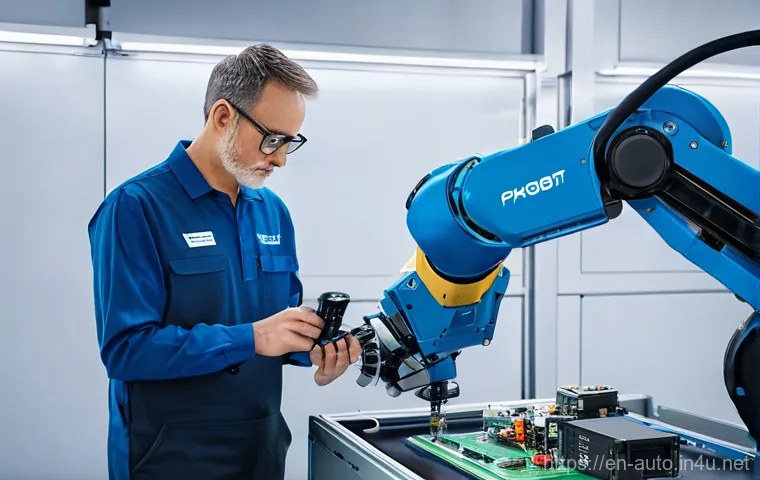
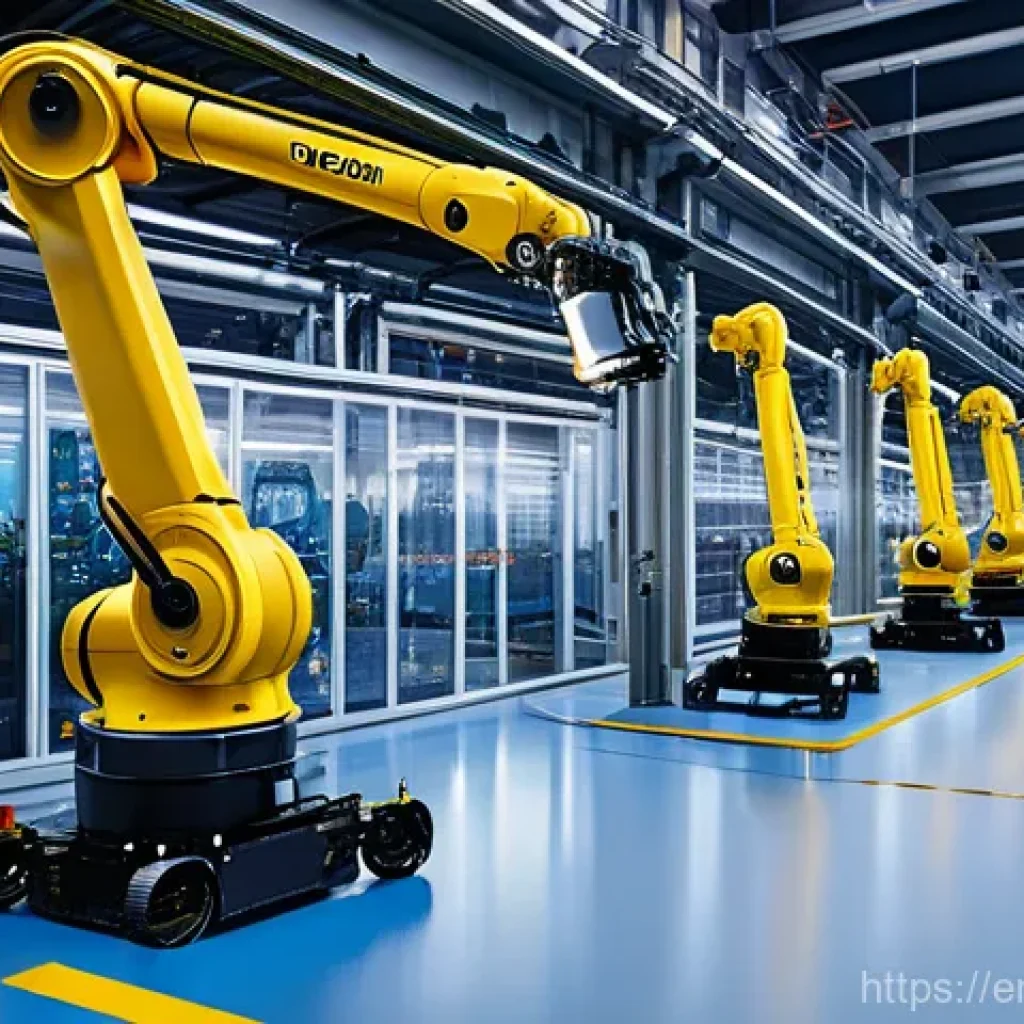
Honestly, it’s mind-boggling to witness the transformation happening right before our eyes in industrial settings. For years, when we thought of factory robots, we pictured these incredibly powerful but ultimately rigid machines performing the same task over and over. They were brilliant at what they did, no doubt, but flexibility wasn’t exactly their strong suit. Now, however, with the seamless integration of artificial intelligence, these titans of industry are developing ‘brains’ – they’re becoming intelligent, adaptive, and unbelievably versatile. I’ve personally seen firsthand how this shift from programmed obedience to intelligent autonomy is completely reshaping how products are made, how goods are moved, and even how workers interact with their mechanical counterparts. It’s a seismic shift, moving us light-years beyond simple automation and into a realm of truly smart manufacturing, logistics, and beyond. This convergence isn’t just a fancy tech buzzword; it’s a practical, on-the-ground revolution making operations smarter and more efficient than ever before.
Smart Sensors and Data-Driven Decisions
One of the most immediate and impactful changes I’ve observed is how AI empowers robots through advanced sensing capabilities. Gone are the days when a robot only knew to follow a predetermined path. Now, equipped with an array of sophisticated sensors—think high-resolution cameras, LiDAR, and even haptic feedback systems—these machines can perceive their environment with incredible detail. It’s like giving them eyes and touch! What really brings this to life is the AI backend, which processes this torrent of data in real-time. This allows robots to make instantaneous decisions, adjust their movements on the fly, and even identify anomalies or defects that a human eye might miss, especially over long shifts. From my perspective, this isn’t just about faster processing; it’s about making sense of complexity and enabling robots to operate effectively in dynamic, less structured environments, a capability that was once firmly in the human domain. It’s truly incredible how much more aware and responsive these machines have become.
Predictive Maintenance: A Game Changer
Speaking of smarter operations, one area where I’ve seen AI-powered robotics make a significant dent is in predictive maintenance. I remember the frustration of unexpected breakdowns on production lines, leading to costly downtime and missed targets. Traditional maintenance schedules were often reactive or time-based, meaning you either fixed something after it broke or replaced parts too early, just in case. But with AI, it’s a whole new ballgame. Robots equipped with AI can continuously monitor their own performance and the wear and tear on their components. The AI algorithms analyze operational data—vibration patterns, temperature fluctuations, motor currents—to predict potential failures before they even happen. This means maintenance can be scheduled precisely when needed, minimizing interruptions, extending equipment lifespan, and dramatically cutting down on maintenance costs. It’s like having a crystal ball for your machinery, and I can tell you from personal experience, the peace of mind that comes with this level of foresight is absolutely invaluable for any manufacturing facility. It keeps things humming along beautifully.
Beyond Repetition: Robots That Learn and Adapt
When I started following the robotics space years ago, the idea of a robot truly “learning” felt like something out of a sci-fi movie. Most industrial robots were, by design, masters of repetitive tasks, programmed meticulously for one specific function. Deviate from that function, and they were lost. But today? It’s a completely different story. The integration of advanced AI, particularly machine learning, has fundamentally changed what industrial robots are capable of. They’re no longer just executing commands; they’re interpreting, reasoning, and, most impressively, adapting. This isn’t just a minor upgrade; it’s a paradigm shift that allows robots to move beyond rigid programming and into a realm of continuous improvement and dynamic problem-solving. From my own observations, this capacity for learning is what truly unlocks their potential in environments that aren’t perfectly predictable, which, let’s be honest, is most real-world scenarios.
Machine Learning in Action: Continuous Improvement
Imagine a robot on an assembly line that, instead of just repeating a pre-programmed weld, actually improves its welding technique over time. That’s machine learning in action. Through reinforcement learning and deep learning algorithms, robots can be trained to recognize patterns, identify optimal strategies, and refine their actions based on feedback from their environment. I’ve heard stories from engineers who are genuinely surprised by how quickly these systems can master complex tasks once given the right data and objectives. This continuous improvement means that over weeks and months, the robot doesn’t just perform a task; it performs it better, faster, and with greater precision. It’s like having an apprentice who never tires and always strives for perfection. This self-optimization feature drastically reduces the need for constant human reprogramming and fine-tuning, freeing up skilled workers for more complex, creative, and higher-value tasks. It’s an exciting development that genuinely changes the workflow dynamic.
Adapting to Unpredictable Environments
One of the biggest limitations of traditional industrial robots was their inability to handle variability. If a part was slightly misaligned, or an object’s position changed unexpectedly, the robot would typically fault. This meant factories had to be meticulously structured and controlled. However, with AI, robots are becoming far more resilient to the unexpected. Through advanced computer vision and machine learning, they can identify objects even if they’re not in the exact expected position or orientation. They can even adjust their gripping force based on the perceived fragility of an item, or navigate around unexpected obstacles on a warehouse floor. I’ve personally watched demonstrations where robots adapt to changes in real-time, picking up items from a disorganized bin (a “bin-picking” challenge that was once incredibly difficult for robots) or adjusting their movements to avoid a human worker who unexpectedly enters their workspace. This newfound adaptability is crucial for making automation viable in a wider range of industries, moving beyond highly structured manufacturing lines into more dynamic and chaotic environments. It truly feels like these machines are becoming more ‘aware’ of their surroundings.
A Safer Tomorrow: AI and Human-Robot Collaboration
When I first got into this field, there was a palpable sense of apprehension around robots—fear of job displacement, but also concerns about safety. Industrial robots were powerful, fast, and, frankly, quite dangerous if a human inadvertently entered their operational zone. Safety protocols involved strict caging and physical separation. However, the advent of AI has fundamentally reshaped this narrative, moving us towards an era where robots don’t just work alongside humans, but actively collaborate with them, all while enhancing safety. It’s a remarkable evolution that addresses many of the initial concerns head-on, creating work environments that are both more productive and significantly safer. I’ve seen firsthand how these advancements are building bridges, not walls, between humans and machines.
Cobots: Working Shoulder-to-Shoulder with Humans
The rise of collaborative robots, or “cobots,” is perhaps the most tangible example of this improved safety and collaboration. Unlike their larger, caged counterparts, cobots are designed from the ground up to share a workspace with humans without needing extensive safety barriers. How do they do it? Thanks to sophisticated AI. These robots are equipped with an array of sensors—like proximity sensors, force-torque sensors, and advanced vision systems—that allow them to perceive human presence and intent. If a human gets too close or enters their working envelope unexpectedly, the cobot can slow down, stop, or even safely redirect its movement. I’ve personally interacted with cobots that exhibit an almost intuitive understanding of human presence, making the shared workspace feel incredibly natural and, more importantly, safe. This capability allows humans to handle the tasks requiring dexterity, problem-solving, and decision-making, while the cobots take on the repetitive, strenuous, or ergonomically challenging work, leading to a much more harmonious and efficient production line. It truly feels like a partnership in action.
Enhanced Safety Protocols and Accident Prevention
Beyond cobots, AI is also elevating safety across the board for all types of industrial robots. By continuously monitoring operational data and environmental conditions, AI systems can predict and prevent potential accidents before they occur. For example, AI can identify unusual vibrations in a robotic arm that might indicate a coming mechanical failure, flagging it for maintenance before it becomes a catastrophic event. Furthermore, AI-powered vision systems can monitor entire factory floors, identifying unsafe human behaviors, like entering restricted zones, or detecting potential hazards like spills or obstructions. I’ve seen some advanced systems that can even analyze human posture and movement to prevent ergonomic injuries, recommending safer ways to lift or position items. This proactive approach to safety, driven by intelligent algorithms, creates a much more secure working environment. It’s not just about preventing machine-on-human incidents; it’s about creating a holistic safety net that protects workers from a broader range of risks, allowing everyone to feel more secure in their roles. This continuous vigilance is something a human operator simply couldn’t maintain across an entire facility.
Unlocking Customization: The Rise of Flexible Manufacturing
Remember when “mass production” was the undisputed king? Everything was about churning out identical products in huge volumes to achieve economies of scale. While that model still has its place, the market is increasingly demanding something different: personalization and customization. Consumers want products tailored to their specific needs and tastes, and businesses are looking for agility to respond to rapidly changing trends. This is where the fusion of industrial robotics and AI truly shines, enabling a level of manufacturing flexibility that was once considered impossible or prohibitively expensive. From my vantage point, this shift is not just about making things differently; it’s about making the right things, precisely when and how they’re needed, which is a massive leap forward for the entire industry.
On-Demand Production and Mass Personalization
The dream of “batch size one”—producing a single, customized item at the cost efficiency of mass production—is becoming a reality thanks to AI-powered robotics. Traditional production lines were rigid; retooling for a new product could take hours or even days. But imagine a robot that can, with minimal human intervention, switch between tasks or adjust its parameters to produce a custom variant of a product. This is happening now! AI algorithms can quickly reconfigure robotic movements, tool paths, and even material handling based on individual customer orders. For instance, in the automotive industry, I’ve seen advanced setups where different vehicle models or custom features can be integrated seamlessly onto the same assembly line. This agility means companies can produce bespoke items on demand, reducing waste, minimizing inventory, and responding with lightning speed to market shifts. It’s a massive competitive advantage, and for consumers, it means getting exactly what they want, often faster than ever before. It’s truly exciting to see this level of responsiveness come to life.
Rapid Prototyping and Agile Development
Beyond final product manufacturing, AI-powered robotics is also accelerating the entire product development cycle, particularly in rapid prototyping and agile development. In the past, creating and testing prototypes was a slow, labor-intensive, and often expensive process. Each iteration required significant manual effort. Now, robots guided by AI can fabricate prototypes with incredible speed and precision directly from digital designs. If a design needs tweaking, the AI can often suggest optimizations, and the robot can quickly produce a revised prototype. I’ve heard stories from product designers who say this iterative capability has slashed their development times by months. It allows them to test more ideas, fail faster (and thus learn faster), and bring more innovative products to market. This dynamic feedback loop, where AI helps design, robots build, and data informs the next iteration, fosters a culture of continuous innovation. It’s like having an incredibly efficient, tireless R&D team working around the clock, pushing the boundaries of what’s possible in product creation.
From Warehouses to Hospitals: Diverse Applications of Smart Robotics
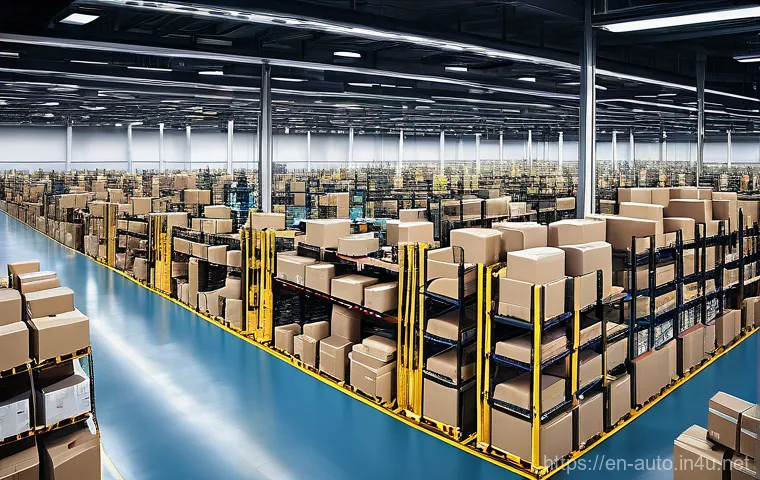
It’s genuinely incredible how quickly AI-powered robotics is spreading its wings beyond traditional manufacturing plants. When these technologies first emerged, the focus was almost entirely on heavy industry – automotive, electronics, and so on. But from what I’ve seen, that’s just the tip of the iceberg. The adaptability, precision, and intelligence that AI brings to robotics mean these systems are now solving complex problems and enhancing operations across an astonishingly diverse array of sectors. It’s a testament to their versatility, and it feels like every other week, I’m hearing about a new, groundbreaking application in an unexpected field. This broad adoption is a clear indicator that the future of work across many industries will undoubtedly include these smart machines.
Revolutionizing Logistics and Supply Chains
Let’s talk about logistics and supply chains for a moment. I used to think of warehouses as purely human domains, bustling with people picking, packing, and moving goods. While human involvement remains crucial, AI-powered robots are transforming these spaces into highly optimized, incredibly efficient hubs. Autonomous Mobile Robots (AMRs), guided by AI, can navigate complex warehouse layouts, transport items, and even collaborate to sort packages. They can learn the most efficient routes, avoid obstacles, and dynamically adjust to changing inventory needs. I’ve personally visited fulfillment centers where these robots are working tirelessly, dramatically speeding up order processing and reducing human error. This isn’t just about moving boxes faster; it’s about optimizing the entire flow of goods, from inbound receiving to outbound shipping, ensuring that products get to customers quicker and with fewer snags. It’s a game-changer for e-commerce and global trade, and the operational improvements are truly staggering.
AI Robotics in Healthcare: Precision and Care
Now, this is an area that genuinely fascinates me: the application of AI robotics in healthcare. It might seem counterintuitive at first – robots in such a human-centric field. But the reality is, these intelligent machines are performing tasks with a level of precision and consistency that is simply impossible for humans to maintain over long periods, especially in repetitive or highly delicate procedures. Think about surgical robots, for example, enhanced with AI. They can assist surgeons by providing incredibly steady hands, executing microscopic movements, and even analyzing real-time data to help guide procedures with enhanced accuracy. Beyond the operating room, I’ve seen AI-powered robots being used for dispensing medications, sterilizing hospital environments, and even assisting with patient rehabilitation, providing consistent and personalized therapy sessions. These applications aren’t about replacing human care; they’re about augmenting it, allowing medical professionals to focus on the truly complex, empathetic aspects of patient care, while robots handle the precision-critical or routine but essential tasks. It’s a blend of technology and compassion, creating a healthier, safer environment for everyone.
The Economic Upswing: Boosting Efficiency and Innovation
Whenever new technologies emerge, especially those as transformative as AI and robotics, there’s always a natural conversation about economic impact. And from what I’ve gathered through countless industry reports and conversations with business leaders, the economic benefits of this convergence are proving to be substantial and far-reaching. It’s not just about shaving a few pennies off production costs; we’re talking about a fundamental restructuring of how businesses operate, leading to significant boosts in efficiency, the unlocking of new market opportunities, and ultimately, driving greater innovation. I truly believe that embracing these technologies is not just an option for businesses looking to thrive; it’s becoming an absolute necessity in a competitive global landscape.
Cost Reduction and Productivity Gains
Let’s get down to brass tacks: businesses are always looking for ways to cut costs and increase output, and AI-powered robotics delivers on both fronts. By automating repetitive, labor-intensive tasks, companies can significantly reduce operational expenses associated with manual labor, including wages, benefits, and the costs of workplace injuries. More importantly, robots work tirelessly, without breaks, and with unparalleled consistency. This leads to massive gains in productivity. I’ve spoken with factory owners who report seeing production rates jump by 20-30% after implementing advanced robotic systems, all while maintaining or even improving product quality. This isn’t about replacing humans wholesale, but rather redeploying human talent to more strategic, creative, and oversight roles. The combined effect of lower direct costs and higher output means a healthier bottom line, allowing companies to invest more in R&D, employee training, or even pass savings onto consumers, which is a win-win for everyone involved in the economic ecosystem.
Driving New Business Models and Market Opportunities
Perhaps even more exciting than cost reduction is the way AI and robotics are catalyzing entirely new business models and opening up previously unimaginable market opportunities. Because these intelligent systems enable such high levels of customization and agility, companies can now offer services and products that simply weren’t feasible before. Think about companies offering highly personalized consumer goods, or manufacturers who can switch product lines with incredible speed to meet niche demands. This flexibility allows businesses to explore untapped markets and cater to a wider range of customer needs. I’ve seen small startups leverage affordable AI-robot solutions to compete effectively with much larger, established players, demonstrating how this technology can level the playing field. Furthermore, the very development and maintenance of these advanced robotic systems have created new industries and a huge demand for skilled AI engineers, data scientists, and robotics technicians. It’s a virtuous cycle: the technology drives economic growth, which in turn fuels further innovation and creates even more opportunities. It’s genuinely a thrilling time to be witnessing this kind of economic transformation.
| Feature | Traditional Industrial Robots | AI-Powered Industrial Robots |
|---|---|---|
| Programming | Explicit, rule-based, manual teaching | Learns from data, adapts, self-optimizes |
| Adaptability | Rigid, struggles with variability | Dynamic, adapts to changes in environment/tasks |
| Decision-Making | Pre-programmed responses only | Real-time, data-driven, complex reasoning |
| Human Collaboration | Physical separation, safety cages | Safe, collaborative workspaces (cobots) |
| Error Handling | Faults on unexpected inputs | Can detect, analyze, and recover from errors |
| Maintenance | Time-based or reactive | Predictive, condition-based maintenance |
Navigating the Future: Workforce Evolution and Ethical AI
While the benefits of merging industrial robotics with AI are undeniably vast and exciting, it would be disingenuous to ignore the critical conversations that also arise from such a profound technological shift. As someone who’s constantly engaging with industry leaders and thought pioneers, I hear a lot about the need to navigate this future responsibly. It’s not just about implementing the tech; it’s about understanding its broader societal implications, particularly concerning the workforce and the ethical considerations that come with building increasingly intelligent machines. From my perspective, proactively addressing these challenges is just as important as celebrating the innovations themselves, ensuring that this technological revolution truly benefits everyone.
Reskilling and Upskilling for the Automated Age
One of the most pressing concerns, and one I often encounter, is the impact on jobs. It’s true that some tasks, particularly repetitive or dangerous ones, are being automated away. However, I’ve found that the narrative isn’t simply one of job displacement, but rather job transformation. AI-powered robotics isn’t necessarily taking away jobs; it’s changing the nature of work and creating entirely new roles. The demand for robot technicians, AI specialists, data analysts, and human-robot interaction designers is skyrocketing. The real challenge, then, lies in reskilling and upskilling the existing workforce to meet these new demands. Businesses, educational institutions, and governments have a shared responsibility to provide robust training programs that equip workers with the skills needed to thrive in this automated age. I’ve personally seen companies invest heavily in training their employees to become robot operators or programmers, transitioning them from manual labor to supervisory roles. This proactive approach ensures that the human element remains central to the factory of the future, working alongside machines in more fulfilling and intellectually stimulating capacities.
Ethical Considerations and Responsible AI Development
Finally, as robots become more autonomous and AI more sophisticated, the ethical implications become increasingly important. Questions arise that we simply didn’t have to grapple with before. Who is responsible when an AI-driven robot makes an error? How do we ensure fairness and prevent bias in the algorithms that guide these machines, especially if they are used in sensitive applications like healthcare or public safety? What about data privacy when robots are collecting vast amounts of information about their environments and human interactions? These aren’t easy questions, and there aren’t simple answers. From my experience, responsible AI development means embedding ethical considerations into every stage of the design and deployment process. It requires transparency, accountability, and a commitment to human-centric AI. This involves developing clear regulations, establishing ethical guidelines for AI developers, and fostering ongoing public dialogue about the kind of future we want to build with these powerful technologies. It’s a complex, evolving landscape, but one that absolutely demands our attention and careful consideration to ensure that AI and robotics serve humanity’s best interests.
글을 마치며
Honestly, reflecting on everything we’ve covered, it’s clear that the landscape of industrial robotics is not just evolving; it’s undergoing a complete metamorphosis thanks to AI. I’ve personally seen how these intelligent machines are no longer just tools but becoming true partners, driving unprecedented levels of efficiency, safety, and innovation across countless industries. What truly excites me is the boundless potential this convergence unlocks, not just for businesses, but for creating a more dynamic and, dare I say, more fascinating world of work. It’s been an incredible journey exploring this with you, and I genuinely believe we’re just at the beginning of what AI and robotics can achieve together. Keep an eye on this space – it’s only going to get more thrilling! It’s truly a time of remarkable change, and being part of this transformation, even as an observer and communicator, is genuinely exhilarating. I can’t wait to see what comes next!
알아두면 쓸모 있는 정보
1. Start Small, Think Big: If you’re considering integrating AI robotics into your operations, don’t feel pressured to overhaul everything at once. Many successful implementations begin with piloting AI-powered solutions in a single, well-defined area. This approach allows you to gather real-world data, identify bottlenecks, and fine-tune your strategy before scaling up. It’s about learning by doing and building confidence in the technology, which, believe me, makes all the difference when you’re looking to make a bigger leap. Taking those first, carefully considered steps can save you a lot of headaches down the line and build a solid foundation for future expansion.
2. Invest in Your People: The biggest mistake I see companies make is focusing solely on the tech and forgetting the human element. AI robotics isn’t about replacing your workforce; it’s about empowering them. Prioritize upskilling and reskilling programs for your employees. Training them in new roles like robot supervision, data analysis, or AI system maintenance not only ensures a smoother transition but also cultivates a more engaged and adaptable team. Happy, skilled employees are your greatest asset in this new era, turning potential disruption into an opportunity for growth and development for everyone involved.
3. Data is Your Goldmine: AI thrives on data, and the more relevant, high-quality data you can provide, the smarter your robots will become. Start thinking about how you can collect, store, and analyze operational data effectively. This includes everything from sensor readings and production metrics to maintenance logs. A robust data strategy is the bedrock of successful AI integration, enabling predictive maintenance, process optimization, and continuous improvement. It truly is the fuel that drives intelligence, transforming raw information into actionable insights that can revolutionize your operations.
4. Embrace Collaboration, Not Just Automation: Move beyond the old mindset of robots simply replacing human tasks. The real magic happens when humans and AI-powered robots collaborate. Design workflows where robots handle the repetitive, strenuous, or dangerous tasks, freeing up your human team for problem-solving, creative input, quality control, and customer interaction. This synergy not only boosts productivity but also makes work more fulfilling for everyone involved. I’ve witnessed firsthand how powerful this partnership can be, leading to an environment where both human and machine strengths are leveraged to their fullest potential.
5. Stay Curious and Adaptable: The field of AI and robotics is moving at lightning speed. What’s cutting-edge today might be standard tomorrow. To truly leverage these technologies, it’s crucial to foster a culture of continuous learning and adaptability within your organization. Keep an eye on emerging trends, attend industry conferences, and encourage your team to experiment with new tools and approaches. Staying agile and open to change is perhaps the most valuable tip I can offer for thriving in this ever-evolving technological landscape, ensuring you remain competitive and innovative in the years to come.
중요 사항 정리
Wrapping things up, it’s clear that the integration of AI into industrial robotics is a game-changer. We’ve seen how this powerful combination is creating robots that are not only more intelligent and adaptive but also safer and more collaborative, fundamentally redefining how we manufacture, innovate, and work. This isn’t just a fleeting trend; it’s a foundational shift driving unprecedented efficiency, opening up new business models, and ultimately shaping a future where human ingenuity and machine intelligence work hand-in-hand to solve complex challenges. The journey ahead is certainly exciting, with continuous innovation promising even more transformative applications. Embracing these advancements responsibly will be key to unlocking a future that is both productive and ethically sound for all.
Frequently Asked Questions (FAQ) 📖
Q: What exactly does it mean when we talk about industrial robotics and
A: I “converging,” and why is it such a game-changer right now? A1: Oh, this is such a fantastic question, and honestly, it’s at the heart of everything exciting happening in tech!
For years, industrial robots were, let’s face it, brilliant but somewhat rigid workhorses. They’d do their programmed tasks with incredible precision, but they couldn’t think or learn beyond their coding.
Now, imagine giving those powerful robotic bodies a super-smart brain – that’s the convergence we’re talking about! It means we’re not just attaching AI to a robot as an add-on; we’re integrating artificial intelligence, machine learning, and advanced computer vision directly into the very fabric of industrial robotics.
From what I’ve observed, this isn’t just an incremental step; it’s a giant leap. Suddenly, these machines aren’t just performing tasks; they’re understanding their environment, making real-time decisions, adapting to unforeseen changes, and even predicting maintenance needs before they arise.
What makes it a game-changer right now? Well, we’ve reached a tipping point where AI algorithms are incredibly sophisticated, processing power is cheaper than ever, and sensor technology is so advanced that robots can ‘see’ and ‘feel’ their surroundings with unprecedented detail.
It’s like upgrading from a flip phone to the latest smartphone – the difference in capability and potential is just mind-blowing!
Q: How is this fusion of
A: I and robotics actively transforming industries, and can you give some tangible examples? A2: Absolutely! This isn’t some futuristic concept; it’s happening right before our eyes, and the impact across various sectors is already profound.
Take manufacturing, for instance. I’ve personally seen how factories are moving away from rigid assembly lines towards hyper-flexible production. Robots equipped with AI can now handle a much wider variety of tasks, adjusting to different product variations on the fly.
This means custom orders, even for small batches, are becoming economically viable – talk about personalization at scale! In logistics and warehousing, it’s revolutionary.
AI-powered autonomous mobile robots (AMRs) are navigating complex warehouse layouts, optimizing routes, and picking items with incredible speed and accuracy, reducing human error and significantly speeding up delivery times.
It’s not just about speed, though; it’s about safety too, with robots handling repetitive or dangerous tasks. And then there’s healthcare, which is truly inspiring.
From robotic surgical assistants that enhance precision to AI-driven robots assisting with patient monitoring and even delivering medications, the blend is freeing up human medical professionals to focus on critical care and complex decision-making.
These aren’t just minor tweaks; these are fundamental shifts that are making operations faster, safer, more efficient, and opening up entirely new possibilities for innovation.
Q: While the benefits are clear, what are some of the bigger questions or challenges we need to address as industrial
A: I and robotics become more integrated into our lives? A3: That’s a super important point, and it’s a conversation we all need to be having. As exhilarating as this technological progress is, it naturally brings up some significant challenges and ethical considerations.
The most immediate one that pops into everyone’s mind is often the impact on jobs. While these technologies create new roles in areas like AI development, robot maintenance, and data analysis, they also automate tasks traditionally performed by humans.
This isn’t necessarily about eliminating jobs, but rather transforming them. We need to focus heavily on reskilling and upskilling programs to ensure our workforce is ready for these new, often more specialized, positions.
From my perspective, it’s less about robots taking over and more about humans and robots collaborating to achieve things neither could do alone. Then there are the ethical dilemmas: how do we ensure fairness in AI decision-making?
What about data privacy and security when highly intelligent machines are collecting vast amounts of information? And of course, safety is paramount. We need robust regulatory frameworks and industry standards to ensure these powerful machines operate safely, especially in environments shared with humans.
It’s a journey, not a destination, and openly addressing these challenges through thoughtful discussion and proactive planning is crucial to harnessing the full, positive potential of this incredible convergence.