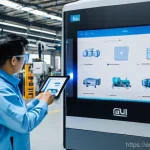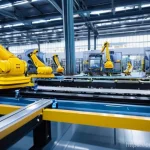
Hey there, automation enthusiasts and aspiring tech wizards! Have you ever stood in awe of a sprawling, modern factory floor, watching robots glide seamlessly, machines working in perfect synchrony, and an almost magical flow of production?
I know I have. There’s something truly captivating about observing complex systems operate flawlessly, and it’s a wonder that often sparks the question: “How is all this controlled?”Well, what if I told you that the secret sauce, the very brain behind this industrial ballet, is something you could learn to program?
We’re talking about Programmable Logic Controllers, or PLCs – the unsung heroes of industrial automation that are absolutely pivotal in our rapidly evolving, smart factory world.
We’re living smack in the middle of Industry 4.0, where connectivity, data exchange, and artificial intelligence aren’t just buzzwords, they’re the new reality, and PLCs are at the very heart of this transformation, becoming intelligent automation hubs.
From my own journey in this dynamic field, I’ve seen firsthand how mastering PLC programming isn’t just about understanding code; it’s about wielding a powerful tool that literally brings machines to life, optimizing everything from production lines to essential infrastructure.
The demand for professionals skilled in this area is skyrocketing, with automation specialists being some of the hardest roles to fill – a clear sign of the immense career opportunities waiting.
Think about it: PLCs are now integrating with AI for predictive maintenance, leveraging edge computing for real-time decisions, and communicating seamlessly across vast networks.
So, if you’re ready to move beyond theoretical concepts and dive deep into the practical application of industrial control, understanding the real-world challenges and cutting-edge trends, then you’ve landed on the right page.
This isn’t just about learning; it’s about gaining a future-proof superpower that makes machines perform their incredible dance with precision and intelligence.
Let’s dive into the practical side of PLC programming and discover exactly what you need to know to excel!
Decoding the Language of Machines: Ladder Logic and Beyond

Alright, so you’re ready to get your hands dirty with PLC programming? Fantastic! The first thing we need to wrap our heads around is the actual language these industrial brains speak. For many years, when I first started tinkering with these incredible devices, Ladder Logic Diagram (LD) was king, and frankly, it still holds a significant place in the industrial world, especially here in North America and older installations globally. It’s incredibly intuitive, looking just like the relay control circuits it replaced, making it easy for electricians and engineers transitioning from traditional hard-wired control to grasp. You literally see “rungs” of logic, with inputs on the left and outputs on the right, mirroring the flow of electricity. My own journey began by poring over dusty manuals and connecting real-world sensors to PLCs, watching those virtual contacts close and open on a screen, and trust me, there’s nothing quite like the feeling when your first simple ladder program actually makes a motor spin! It’s a foundational skill, but honestly, it’s just the tip of the iceberg now. We’re seeing a powerful shift towards more advanced and structured programming languages, driven by increasingly complex automation tasks and the need for more efficient, reusable code. Understanding the core principles of how inputs trigger outputs, how timers and counters function, and how different logical conditions combine is paramount, regardless of the specific language you end up using. It’s like learning grammar before you write a novel; essential for clarity and precision. The beauty of it is that once you grasp Ladder Logic, many of the underlying concepts transfer beautifully to other programming paradigms within the PLC ecosystem, making your learning curve for new languages surprisingly smoother.
The Enduring Power of Ladder Logic
Even with newer programming methods on the rise, Ladder Logic isn’t going anywhere fast. It’s practically ubiquitous in existing systems, particularly in manufacturing plants that have been running for decades. When you walk onto an automotive assembly line or into a food processing facility, chances are you’ll find PLCs programmed predominantly with Ladder Logic. The visual nature of it makes troubleshooting a breeze – you can literally follow the logic flow on a monitor, almost like tracing electrical wires, which is a huge advantage when a machine goes down and every second of downtime costs a fortune. I’ve spent countless hours late at night in factories, staring at a laptop screen, using the live monitoring features of Ladder Logic to pinpoint a faulty sensor or a misplaced limit switch. This direct visual feedback is invaluable for maintenance technicians, allowing them to quickly diagnose issues without needing a deep understanding of complex code structures. Furthermore, many PLC manufacturers continue to enhance their Ladder Logic editors with more advanced features, allowing for structured programming practices even within this traditional framework. It’s a testament to its effectiveness and simplicity for certain types of control tasks. Plus, many entry-level PLC courses and certifications still focus heavily on Ladder Logic, providing a solid foundation before moving on to more abstract concepts. My advice? Embrace it, understand its strengths, and recognize where other languages might offer a more elegant solution.
Exploring Structured Text and Function Block Diagrams
While Ladder Logic is a fantastic starting point, as systems grow in complexity and integrate with higher-level IT systems, you’ll inevitably encounter other languages, primarily Structured Text (ST) and Function Block Diagram (FBD). Structured Text, to me, feels much more like traditional software programming languages such as C++ or Python, using familiar IF-THEN-ELSE statements, FOR loops, and complex mathematical expressions. It’s incredibly powerful for calculations, data manipulation, and implementing sophisticated control algorithms that would be incredibly cumbersome, if not impossible, to achieve efficiently in Ladder Logic. I remember a project where we had to implement a complex PID control loop with adaptive tuning, and trying to do that in Ladder Logic felt like trying to write an essay using only pictograms – it just wasn’t efficient. Switching to Structured Text made the code cleaner, more readable, and much easier to maintain. Function Block Diagram, on the other hand, is a graphical language that uses pre-defined function blocks (like timers, counters, arithmetic operations, or custom functions you create) that are wired together to create the control logic. It’s excellent for visualizing data flow and control sequences, especially in process industries. Many modern PLCs, adhering to the IEC 61131-3 standard, support all these languages, allowing you to choose the best tool for the job or even combine them within a single project. This flexibility is a game-changer, letting you leverage the strengths of each language to build robust, efficient, and maintainable automation solutions. My personal preference often leans towards a hybrid approach, using Ladder Logic for simple discrete controls, FBD for process flow, and ST for intricate calculations and data handling.
Essential Hardware You’ll Encounter in the Wild
Stepping onto a factory floor for the first time, you might feel a bit overwhelmed by the sheer amount of equipment – the whirring motors, flashing lights, and intricate machinery. But look closer, and you’ll start to spot the nerve centers, the PLCs, quietly doing their work. Understanding the physical components that make up a PLC system is just as crucial as understanding the programming languages. When I first started, I used to think of a PLC as just a single box, but I quickly learned it’s a modular system, a collection of specialized components working in concert. Imagine building a high-performance computer; you pick a CPU, memory, a power supply, and various input/output cards. A PLC system is quite similar, just built to withstand the much harsher environments of industrial settings – vibrations, extreme temperatures, and electrical noise are all part of the daily grind. The robustness of this hardware is truly impressive; I’ve seen PLCs running reliably for decades in conditions that would fry a standard PC in weeks. Knowing what each component does and how it interacts with others is fundamental to both designing new systems and, more importantly, troubleshooting existing ones. You’ll become intimately familiar with power supplies, central processing units (CPUs), various input and output modules, and communication cards. Each piece plays a vital role in ensuring that your carefully crafted code translates into real-world actions, making machines perform their designated tasks with precision and reliability. It’s not just about selecting components; it’s about understanding their specifications, their limitations, and how they contribute to the overall resilience and efficiency of the automation system. Trust me, a good grasp of the hardware will save you endless headaches down the line when diagnosing a pesky intermittent fault.
The Brains of the Operation: CPU Modules
At the heart of every PLC system lies the Central Processing Unit, or CPU module. This is the brain, the computational powerhouse that executes your painstakingly written program, manages memory, and oversees all communications within the system. Without a robust CPU, your automation efforts are dead in the water. Modern PLC CPUs are incredibly powerful, often featuring multi-core processors, vast amounts of memory, and advanced diagnostics. When I’m spec’ing out a new system, the CPU choice is paramount; it dictates the speed at which your program runs, the complexity of the logic you can implement, and the amount of data you can process. I recall one particular project where we underestimated the processing power needed for a high-speed packaging line. The original CPU simply couldn’t keep up with the rapid sensor inputs and precise timing requirements, leading to dropped products and inconsistent operations. We had to upgrade, and the difference was night and day. It really hammered home that the CPU isn’t just a component; it’s the engine driving your entire automation strategy. They come with various features like integrated Ethernet ports for network connectivity, built-in real-time clocks, and even web servers for remote monitoring. Selecting the right CPU involves considering factors like scan time, memory capacity for your program and data, and the specific communication protocols you’ll need to support, whether it’s EtherNet/IP, PROFINET, Modbus TCP, or others. It’s where your logic actually lives and breathes, making every decision and calculation necessary to keep the industrial ballet in perfect motion. Pay close attention to its specifications, as it truly defines the capabilities of your entire control system.
Input/Output Modules: Sensing and Acting
If the CPU is the brain, then the Input/Output (I/O) modules are the senses and muscles of the PLC system. They are the crucial interface between the digital world of your PLC program and the physical world of machines, sensors, and actuators. Input modules receive signals from external devices like pushbuttons, limit switches, proximity sensors, temperature sensors, and encoders, converting these real-world electrical signals into digital data that the CPU can understand. Output modules, conversely, take the digital commands from the CPU and convert them back into electrical signals to control devices such as motors, solenoids, lights, and relays. Imagine a production line: an input module senses a product moving past a sensor, the CPU processes this, and an output module then activates a pneumatic cylinder to push the product onto the next conveyor. It’s a constant dance of sensing and acting. From my experience, I/O modules are often where the most common issues arise, simply because they are directly exposed to the noisy and sometimes harsh industrial environment. Faulty wiring, sensor failures, or blown output fuses are regular occurrences, making a good understanding of I/O crucial for troubleshooting. You’ll encounter various types: digital (on/off signals), analog (continuous values like temperature or pressure), and specialized modules for things like high-speed counting or motion control. Selecting the right I/O involves considering the type of signals (voltage/current levels), the number of points needed, and whether you need diagnostic features. It’s not just about getting a signal in or out; it’s about doing it reliably, safely, and efficiently. Investing in I/O with good diagnostics, like short-circuit protection or broken wire detection, can be a lifesaver during commissioning and ongoing maintenance. They are truly the unsung heroes bridging the gap between abstract code and tangible machine action.
Real-World Scenarios Where PLCs Shine
One of the most exciting aspects of diving into PLC programming is seeing your knowledge come to life in tangible, real-world applications. PLCs aren’t just theoretical constructs; they are the workhorses behind countless processes that we interact with every single day, often without even realizing it. From the moment you pick up your favorite snack at the grocery store to the clean water coming out of your tap, there’s a very high probability that a PLC had a hand in its journey. The sheer versatility of these controllers is what always captivated me. I’ve worked on projects ranging from automating a small, bespoke machine for a local manufacturer to helping commission a massive, multi-million dollar bottling plant. Each scenario presents unique challenges and opportunities to apply your problem-solving skills, and that’s where the true satisfaction comes in. It’s not just about making a light turn on or off; it’s about optimizing an entire process, increasing efficiency, reducing waste, and ensuring safety. Think about the impact: faster production means more goods, less energy consumption means lower costs and a smaller carbon footprint, and robust safety interlocks mean fewer accidents. When you start seeing these systems in action, you realize just how integral PLCs are to our modern industrialized world. They are constantly adapting, too. What used to be simple sequential control systems are now intelligent hubs capable of complex data analysis, predictive maintenance, and seamless integration with enterprise-level software. It’s a field that constantly evolves, making it endlessly fascinating and challenging. Every project offers a new puzzle to solve, a new machine to bring to life, and a new opportunity to make a tangible difference. It’s truly where the rubber meets the road for automation engineers.
Manufacturing Marvels: Assembly Lines and Robotics
If you’ve ever watched a modern manufacturing plant in action, particularly something like an automotive assembly line or a high-speed packaging facility, you’ve witnessed the pinnacle of PLC application. Here, PLCs orchestrate everything with incredible precision and speed. They manage the synchronized movement of robotic arms, control conveyor belts that transport materials, monitor critical process parameters like temperature and pressure in ovens, and ensure that every product is assembled or packaged flawlessly. I vividly remember working on a project for a client who needed to automate a complex custom assembly process involving several robotic cells and dozens of sensors. The PLC was the central brain, ensuring that each robot performed its task at the exact right moment, that parts were presented correctly, and that safety interlocks prevented any collisions. The program was a symphony of timing, sequencing, and error handling. Without PLCs, this level of automation would be impossible; workers would be bogged down in repetitive, often dangerous, tasks, and production rates would plummet. They provide the flexibility to quickly reconfigure lines for new product variations and the diagnostics to rapidly identify and fix bottlenecks. We’re talking about systems that can produce thousands of items an hour, and it’s all thanks to the relentless, precise execution of a PLC program. The drive for greater efficiency and flexibility in manufacturing means that these systems are only going to become more sophisticated, demanding ever-more skilled PLC programmers to design, implement, and maintain them. It’s where the magic of industrial automation truly comes alive, transforming raw materials into finished goods with breathtaking speed and accuracy.
Infrastructure Heroes: Water Treatment to Traffic Control
Beyond the factory floor, PLCs are quietly working behind the scenes, ensuring the smooth operation of essential infrastructure that impacts our daily lives. Think about the water you drink: water treatment plants rely heavily on PLCs to control pumps, valves, chemical dosing systems, and filtration processes, ensuring that water is safely treated and delivered to your home. My friend, who works for a municipal utility, often tells me stories about how critical their PLC systems are, particularly when responding to weather events or equipment failures. A malfunctioning PLC could lead to significant disruptions in water supply or, worse, compromise water quality. Similarly, wastewater treatment facilities use PLCs to manage aeration tanks, sludge processing, and effluent discharge. Another fascinating application is in traffic control systems. Those smart traffic lights that adapt to traffic flow, easing congestion during rush hour? Often, they are controlled by PLCs or similar industrial controllers, communicating with sensors embedded in the road and optimizing signal timings in real-time. Even building automation systems in large commercial buildings, controlling HVAC, lighting, and security, frequently incorporate PLCs for robust and reliable operation. When I look around, it’s incredible to see just how pervasive this technology is, silently making our cities smarter, safer, and more efficient. The requirements for these systems often include extreme reliability, remote monitoring capabilities, and robust data logging, as they are often geographically dispersed and critical to public health and safety. The next time you see a utility substation or a bridge lifting, remember that there’s a good chance a PLC is meticulously controlling the process, ensuring everything runs smoothly and safely.
| Application Area | Common PLC Tasks | Key Benefits |
|---|---|---|
| Manufacturing & Production | Sequence control, robotics integration, motor control, quality inspection, material handling. | Increased efficiency, reduced labor costs, improved product quality, enhanced safety. |
| Process Industries (Chemical, Food & Bev) | PID control, batch processing, recipe management, flow/pressure/temperature control. | Precise control, consistent product quality, regulatory compliance, optimized resource usage. |
| Infrastructure (Water/Wastewater, Energy) | Pump/valve control, remote monitoring, alarm management, power distribution, traffic light sequencing. | Reliability, widespread control, real-time data, public safety, operational efficiency. |
| Building Automation | HVAC control, lighting management, access control, energy monitoring, fire safety systems. | Energy savings, occupant comfort, security, operational simplicity. |
Navigating the Software Landscape: Tools of the Trade
Stepping into the world of PLC programming means getting intimately familiar with a suite of software tools. It’s not just about the code; it’s about the environment where you write, test, debug, and deploy that code. Think of it like a carpenter with their toolbox – you wouldn’t expect them to build a house with just a hammer. Similarly, as a PLC programmer, you’ll need your own set of digital tools to bring your automation ideas to life. Each major PLC manufacturer – Rockwell Automation (Allen-Bradley), Siemens, Schneider Electric, Mitsubishi, and others – has its own proprietary development software, and getting comfortable with at least one, if not several, is a key step. This software isn’t just for writing the program; it’s where you configure the hardware, set up communication networks, monitor the PLC’s status in real-time, and troubleshoot issues. When I first started, the sheer variety of interfaces felt daunting, almost like learning a new operating system for each brand. But over time, you start to recognize common functionalities and patterns, which makes adapting to new platforms much easier. You’ll be spending a significant amount of your time in these environments, so investing time in mastering their quirks and shortcuts will pay dividends in terms of efficiency and reducing frustration. Many of these modern software suites are incredibly powerful, offering advanced features like version control, code reusability libraries, and even integration with simulation platforms. It’s a dynamic landscape, with manufacturers constantly updating their offerings, so staying current with the latest software versions and features is also part of the job. Don’t be afraid to experiment and explore; many vendors offer free demo versions or educational licenses that are perfect for honing your skills without breaking the bank.
Getting Cozy with Development Environments
Your PLC development environment is where all the magic happens. For example, if you’re working with Siemens, you’ll likely be using TIA Portal; for Rockwell Automation, it’s Studio 5000 Logix Designer; and for Schneider Electric, you might encounter EcoStruxure Machine Expert. Each of these platforms offers a comprehensive suite of tools for everything from hardware configuration and network setup to writing, compiling, and downloading your PLC code. When I first transitioned from an older platform to a more integrated environment like TIA Portal, I was blown away by how much more efficient the workflow became. Having everything from HMI design to motion control configuration in a single interface dramatically streamlined my project development. You’ll typically find sections for defining your PLC hardware modules (CPU, I/O cards, communication modules), setting up IP addresses and network topologies, and then, of course, the actual programming editor where you’ll write your Ladder Logic, Structured Text, or Function Block Diagrams. Modern environments also include extensive diagnostic tools, allowing you to monitor tag values, force I/O points, and trace program execution in real-time. This real-time monitoring capability is truly indispensable during commissioning and troubleshooting. Getting comfortable with navigation, understanding how to search for errors, and effectively using the cross-reference tools are skills that will make you significantly more productive. Don’t forget about the help documentation either – it can be a goldmine for understanding obscure instructions or troubleshooting specific error codes. Mastering your chosen development environment is not just about writing code; it’s about efficiently managing your entire automation project lifecycle from conception to maintenance. It’s truly your command center for bringing machines to life.
Simulation and Debugging: Your Best Friends
No matter how brilliant your PLC program is in theory, the real test comes when it interacts with physical hardware. That’s why simulation and debugging tools are, in my opinion, your absolute best friends in PLC programming. Before you even think about connecting to a real machine, you can often test your logic using software-based PLC simulators. These simulators allow you to run your program as if it were on a real PLC, providing virtual inputs and observing virtual outputs. I cannot stress enough how much time and potential equipment damage simulation has saved me over the years. Catching a logic error in a simulator is far less costly than discovering it when a robot crashes into a fixture on the shop floor! Beyond simulation, once your code is on the actual PLC, debugging tools become indispensable. This includes online monitoring, where you can see the real-time status of every input, output, and internal memory bit. You can watch ladder rungs solve, observe the values of analog signals, and verify timer and counter operations. My go-to debugging technique often involves setting breakpoints (if the software supports them, which many modern PLCs do) or carefully stepping through the code, sometimes even “forcing” inputs or outputs to test specific conditions without physically interacting with the machine. This methodical approach is key to isolating problems, whether it’s a sensor that isn’t registering, a logic error in your code, or an actuator that isn’t responding as expected. Effective debugging is an art form, a blend of logical deduction and systematic testing. It’s where you truly become a problem-solver, transforming chaotic machine behavior into predictable, controlled operations. Learning to effectively use these tools will not only make you a more efficient programmer but also a more trusted one, as you’ll be able to get systems up and running, and keep them that way, with confidence.
Leveling Up: Advanced Techniques and Industry 4.0 Integration

Once you’ve got a solid grasp of the fundamentals, the exciting part begins: exploring advanced techniques and understanding how PLCs are integrating into the broader landscape of Industry 4.0. The role of the PLC is evolving rapidly; they’re no longer just isolated controllers executing simple logic. They are becoming intelligent edge devices, crucial nodes in connected systems that span entire enterprises and even reach into the cloud. This evolution demands that we, as PLC programmers and automation engineers, expand our skill sets beyond traditional control methods. I’ve personally been on a steep learning curve over the past few years, moving from simple network communication to dabbling in data analytics and even a bit of machine learning at the edge. It’s incredibly rewarding to see how a PLC, which once just controlled a motor, can now collect vast amounts of operational data, preprocess it, and send it to a cloud platform for predictive maintenance algorithms. This isn’t just theory; it’s happening right now, transforming how factories operate and how decisions are made. We’re talking about systems that can self-diagnose, predict failures before they happen, and even optimize their own performance. The possibilities are truly mind-boggling. To stay relevant and competitive, embracing these new technologies isn’t optional; it’s essential. It means understanding concepts like OPC UA, MQTT, cybersecurity for industrial control systems, and even basic data science principles. It’s about seeing the PLC not as an endpoint, but as a critical gateway for operational technology (OT) to interact with information technology (IT), bridging that traditionally vast divide. This convergence is creating new and exciting challenges, but also unparalleled opportunities for those willing to adapt and learn. The future of automation is here, and PLCs are right at the forefront.
Connecting PLCs to the Cloud and SCADA Systems
The days of isolated, proprietary PLC networks are largely behind us. Modern industrial environments thrive on connectivity, and connecting PLCs to higher-level systems like Supervisory Control and Data Acquisition (SCADA) systems and even cloud platforms is becoming standard practice. SCADA systems provide a centralized interface for operators to monitor and control entire plants or distributed assets, collecting data from multiple PLCs, visualizing processes, and managing alarms. My early projects often involved meticulously configuring communication drivers between PLCs and SCADA servers, a task that has become significantly more streamlined with standardized protocols like OPC UA. This open platform communication standard allows seamless, secure data exchange between PLCs from different vendors and SCADA systems, breaking down proprietary barriers. But the real game-changer is the ability to connect PLCs directly to cloud platforms. Imagine your PLC not just controlling a machine, but also sending real-time operational data – temperature, pressure, cycle times, energy consumption – to a cloud-based historian or analytics platform. This data can then be used for everything from long-term trend analysis and production reporting to feeding machine learning models for predictive maintenance. I’ve been involved in setting up systems where PLCs, using protocols like MQTT, publish data directly to AWS or Azure, enabling engineers and managers to monitor plant performance from anywhere in the world. This level of connectivity provides unprecedented insights and empowers data-driven decision-making, moving us away from reactive maintenance to proactive optimization. It’s a fundamental shift in how we manage industrial operations, and PLCs are at the heart of making it all possible.
The Future is Now: PLCs with AI and IoT
The integration of Artificial Intelligence (AI) and the Internet of Things (IoT) with PLCs is no longer a futuristic concept; it’s happening right now and profoundly changing the landscape of industrial automation. We’re seeing a new generation of “smart” PLCs, or Industrial IoT (IIoT) gateways, that aren’t just executing logic but also running analytics, performing edge computing, and even hosting lightweight AI algorithms. Imagine a PLC collecting vibration data from a motor, and instead of just sending raw data to the cloud, it uses an onboard AI model to detect anomalies and predict a bearing failure *before* it happens, then issues a maintenance alert directly. This is predictive maintenance in action, driven by intelligence at the edge. I’ve been experimenting with some of these newer PLC platforms that include embedded Python interpreters or specialized AI modules, and the capabilities are truly astounding. It means less latency, higher data security, and the ability to make real-time, intelligent decisions without constant reliance on cloud connectivity. Furthermore, the IoT aspect means PLCs are becoming easier to integrate with various sensors and devices, creating a richer tapestry of data points. This also leads to digital twin initiatives, where a virtual model of a physical asset or process can be synchronized with real-time data from PLCs, allowing for simulation, testing, and optimization in a risk-free environment. The skill sets required for this are expanding, pushing us to learn about data acquisition, basic statistics, and even machine learning fundamentals. It’s an exciting time to be in automation, as PLCs evolve from purely deterministic controllers into intelligent, adaptive agents that are actively contributing to the overall intelligence of an industrial enterprise.
Overcoming Common Hurdles and Troubleshooting Like a Pro
Let’s be real: no matter how experienced you are, you’re going to hit snags. Things will go wrong, machines will stop, and you’ll be faced with the challenge of figuring out “why?” But here’s the secret: these moments aren’t failures; they’re your biggest learning opportunities. Troubleshooting is arguably one of the most critical skills a PLC programmer can develop, and it’s something you only truly master through hands-on experience and a systematic approach. I’ve spent countless hours in noisy factories, flashlight in hand, trying to track down a faulty sensor or a miswired connection. There’s a distinct feeling of accomplishment when you finally pinpoint that elusive problem and get a critical production line back up and running. It’s like being a detective, piecing together clues from diagnostic messages, visual inspections, and the behavior of the machinery. The key is to avoid panicking and instead, adopt a calm, logical approach. I always tell newcomers: “The PLC rarely lies, but its environment might.” Meaning, often the code is doing exactly what you told it to do, but the physical inputs aren’t what you expect, or the outputs aren’t having the intended effect. This is where your comprehensive understanding of both hardware and software truly shines. Developing a systematic troubleshooting methodology will not only save you time and frustration but also elevate your expertise to a professional level. It’s not just about fixing the immediate problem, but understanding the root cause to prevent recurrence. A good troubleshooter isn’t just good with a keyboard; they’re also good with a multimeter, a wiring diagram, and a healthy dose of patience.
From Wiring Woes to Logic Lapses
When it comes to troubleshooting, the issues you’ll encounter generally fall into a few broad categories, and recognizing these patterns helps immensely. Often, the simplest problems are physical: wiring errors, loose connections, faulty sensors, or damaged cables. I remember one particularly stubborn issue where a machine would randomly stop. After hours of chasing logic errors, it turned out to be a barely visible nick in a sensor cable that was intermittently shorting out. Physical inspection, a good multimeter, and meticulous tracing of wires are your first line of defense. Then there are power-related issues, from blown fuses to inconsistent voltage supplies, which can cause erratic behavior that’s tough to pin down. Beyond hardware, you’ll delve into the realm of logic errors within your program. This could be anything from a simple typo to a complex timing issue where two events aren’t happening in the correct sequence. Perhaps a counter isn’t resetting when it should, or a motor is activating before a safety guard is closed. These types of problems require a deep dive into your PLC program, using the online monitoring and debugging tools we discussed earlier. It’s a process of elimination, asking “if this is true, then this should happen; is it?” and systematically narrowing down the possibilities. Don’t overlook communication errors either – perhaps the PLC isn’t talking to the HMI correctly, or a remote I/O module is offline. Each type of issue requires a slightly different diagnostic approach, but the underlying principle remains the same: be systematic, document your findings, and don’t assume anything. Learning from each troubleshooting experience is key to building your internal library of “what ifs” and “how to fixes.”
My Top Tips for Efficient Problem Solving
Over the years, I’ve developed a few go-to strategies that have saved my bacon more times than I can count when troubleshooting PLC systems. First, Start Simple and Verify the Obvious: Before diving deep into complex logic, check power supplies, fuses, emergency stops, and basic sensor functionality. Is the light on the sensor actually on? Is the motor getting voltage? So often, the solution is glaringly simple once you step back. Second, Use Your Documentation: Your wiring diagrams, I/O lists, and program comments are your bible. Don’t try to guess; look up the official documentation. A well-commented program can cut troubleshooting time in half. Third, Isolate the Problem: If an entire machine is down, try to narrow it down to a specific section or component. Can you manually operate a single output? Does a particular input register correctly? Breaking the problem into smaller, manageable pieces makes it less intimidating. Fourth, Leverage Online Monitoring: The ability to see your program execute in real-time is your most powerful tool. Watch the logic, see which contacts are closed, what values timers and counters have. If you can force an output without affecting the physical machine, do it to confirm your logic is sound. Fifth, Communicate: Talk to the operators, maintenance staff, and anyone who last interacted with the machine. Their observations, no matter how anecdotal, can provide crucial clues. Sometimes, the problem isn’t technical at all, but operational. Finally, Document Your Fixes: Keep a log of problems encountered and their solutions. This builds your knowledge base and helps you resolve recurring issues much faster. Remember, every problem you solve makes you a better, more experienced PLC programmer. Embrace the challenge, learn from it, and become the go-to expert for keeping those machines running!
The Path Forward: Building Your PLC Programming Career
So, you’ve caught the automation bug, delved into the intricacies of PLC programming, and now you’re wondering, “What’s next?” The good news is, you’ve chosen a field with immense growth potential and a high demand for skilled professionals. As industries worldwide continue to embrace automation and move deeper into Industry 4.0, the need for individuals who can design, program, implement, and maintain these complex systems is skyrocketing. It’s not just about getting a job; it’s about building a fulfilling career where you’re constantly learning, solving challenging problems, and making a tangible impact on efficiency and progress. The beauty of this field is its diversity. You could find yourself working in a cutting-edge robotics lab, optimizing a massive pharmaceutical plant, developing control systems for renewable energy, or even contributing to smart city infrastructure. Each path offers unique experiences and opportunities for specialization. From my vantage point, having navigated this landscape for a while, I can tell you that continuous learning is not just a recommendation; it’s a necessity. Technology moves fast, and staying current with new PLC platforms, communication protocols, and advanced automation concepts will keep you at the top of your game. But beyond the technical skills, developing strong problem-solving abilities, excellent communication, and a knack for critical thinking will be your true superpowers. This isn’t a stagnant career; it’s a dynamic journey of innovation and application. The investment you make in learning PLC programming today will open doors to a future brimming with exciting challenges and rewarding accomplishments. Your journey into automation is just beginning, and trust me, it’s an incredible ride.
Certifications and Continued Learning
To truly distinguish yourself and validate your expertise in the competitive world of industrial automation, pursuing certifications is a fantastic step. While hands-on experience is invaluable, a recognized certification can open doors and demonstrate to potential employers that you possess a foundational understanding and practical skills in specific PLC platforms or automation concepts. Major PLC manufacturers like Rockwell Automation (Allen-Bradley) and Siemens offer their own certification programs, often with different tiers of expertise, from associate to professional level. These certifications typically involve rigorous exams that test your knowledge of their hardware, software, and programming methodologies. Beyond vendor-specific certifications, you might also look into broader industrial automation certifications offered by organizations like ISA (International Society of Automation) or ETA International. I’ve seen firsthand how earning a certification can boost confidence and provide a structured path for learning. It’s not just about the piece of paper; it’s about the knowledge you gain in preparing for it. But remember, certifications are just one part of the puzzle. The field of automation is in constant flux, with new technologies, standards, and best practices emerging regularly. This means continuous learning is paramount. Subscribing to industry journals, attending webinars, participating in online forums, and experimenting with new software features are all excellent ways to stay current. I personally dedicate a few hours each week to reading up on emerging trends in IIoT, cybersecurity for OT, and new programming paradigms. The automation community is also incredibly supportive, so don’t hesitate to reach out to experienced professionals or join local industry groups. Your dedication to lifelong learning will ensure your skills remain sharp and relevant in this ever-evolving field.
Unlocking Diverse Job Opportunities
One of the most appealing aspects of mastering PLC programming is the sheer breadth of job opportunities it unlocks across a multitude of industries. This isn’t a niche skill limited to a single sector; it’s a universal language of industrial control. As an automation specialist or PLC programmer, you could find yourself in traditional manufacturing, working on assembly lines for automotive, aerospace, or consumer goods. Alternatively, you might be drawn to process industries like food and beverage, pharmaceuticals, or chemical processing, where precise control over complex liquid and gas flows is critical. Beyond these, there are exciting roles in infrastructure, such as water and wastewater treatment, power generation and distribution, or even intelligent transportation systems. The rise of smart factories and Industry 4.0 has also created demand for roles focused on integrating PLCs with higher-level IT systems, data analytics, and cloud platforms, blurring the lines between operational technology (OT) and information technology (IT). You could work as a controls engineer, automation engineer, systems integrator (my personal favorite!), field service engineer, or even a technical trainer. Start-ups focused on innovative robotics or industrial IoT solutions are always on the lookout for PLC talent. The beauty is that your skills are highly transferable. If you start in one industry and decide you want a change, your core PLC programming abilities will still be highly valued elsewhere. The demand for these skills consistently outstrips supply, meaning competitive salaries and excellent career progression. Many roles also offer opportunities for travel, working on projects around the globe, which can be an incredibly enriching experience. Your proficiency in PLC programming truly empowers you to shape your career path and make a significant impact wherever you choose to apply your expertise.
Wrapping Things Up
Whew! We’ve covered a lot of ground today, haven’t we? From the foundational rhythms of Ladder Logic to the cutting-edge integrations of AI and IoT, it’s clear that the world of PLC programming is as vibrant and dynamic as ever. I hope this deep dive has not only armed you with some valuable insights but also ignited a spark of excitement for the incredible possibilities that industrial automation offers. Remember, this journey is all about continuous learning, hands-on experimentation, and embracing every challenge as a chance to grow. The machines are waiting for your touch, ready to be brought to life and optimized with your ingenuity. It’s a truly rewarding path, and I’m genuinely thrilled to see where your own automation adventures take you!
Handy Tips You’ll Be Glad You Knew
1. Never Stop Learning: Seriously, the automation landscape changes faster than you can say “Ethernet/IP.” Dedicate time each week to read industry news, explore new software features, and dabble in emerging technologies like OPC UA or MQTT. Your commitment to lifelong learning is your greatest asset in this field.
2. Master the Fundamentals First: Before you jump into complex algorithms or advanced networking, ensure you have a rock-solid understanding of basic Ladder Logic, timers, counters, and data types. These core concepts are the bedrock upon which all sophisticated systems are built, and a weak foundation will lead to endless headaches down the line.
3. Document Everything, Religiously: Trust me on this one. Future you (or your colleagues) will thank you profusely. Clear comments in your code, detailed I/O lists, well-organized project files, and thorough wiring diagrams are invaluable for troubleshooting, maintenance, and future upgrades. It might feel tedious at the time, but it’s a lifesaver.
4. Network and Connect with Peers: The automation community is incredibly supportive. Join online forums, attend industry conferences (even virtual ones!), and connect with other engineers and technicians. Sharing experiences, asking questions, and learning from others’ mistakes and successes can accelerate your growth exponentially. There’s a wealth of knowledge out there, and collaboration makes everyone smarter.
5. Embrace Troubleshooting as a Learning Opportunity: Every time a machine stops, and you’re called to diagnose it, see it as a puzzle to solve. Don’t get frustrated; get systematic. Each successful fix builds your intuition and problem-solving skills, turning you into the go-to expert who can keep things running smoothly. Plus, the feeling of getting a line back up is truly exhilarating!
Key Takeaways for Your Automation Journey
At its core, PLC programming is about bridging the gap between abstract logic and tangible industrial action. We’ve seen how Ladder Logic provides an intuitive entry point, while languages like Structured Text offer immense power for complex tasks. Understanding the hardware – from the CPU’s brainpower to the I/O modules’ senses – is crucial for both design and effective troubleshooting. PLCs are the silent heroes powering everything from factory floors to our essential infrastructure, constantly evolving with Industry 4.0 trends like cloud connectivity, AI, and IoT. Your journey in this field will be marked by continuous learning, systematic problem-solving, and a deep appreciation for precision and reliability. It’s a challenging yet incredibly rewarding career, promising diverse opportunities and the chance to shape the automated world around us.
Frequently Asked Questions (FAQ) 📖
Q: What exactly are PLCs and why are they suddenly so critical in this whole Industry 4.0 thing?
A: Oh, this is a fantastic starting point! Think of a PLC, or Programmable Logic Controller, as the sturdy, industrial-grade brain of a machine or an entire production line.
It’s basically a specialized digital computer, built tough to withstand the harsh conditions of a factory floor – you know, high temperatures, dust, vibration, and all that fun stuff that would make a regular PC cry for its mommy.
For decades, PLCs have been the workhorses, replacing complex, bulky relay systems to automate tasks with precision and reliability. Now, why are they suddenly more critical in the age of Industry 4.0, you ask?
Well, it’s because their role has expanded way beyond just simple control. In a smart factory, PLCs aren’t isolated anymore; they’re the real-time link between the physical machinery and the digital intelligence that drives optimization.
They’re becoming intelligent automation hubs, gathering data from countless sensors, translating it into actionable insights, and coordinating actions across an entire network of machines and systems.
I’ve seen how they seamlessly integrate with the Industrial Internet of Things (IIoT), leveraging edge computing to make lightning-fast decisions right on the factory floor, and even starting to dance with AI for things like predictive maintenance.
They’re not just executing commands; they’re enabling constant communication, data analysis, and adaptability, which are the cornerstones of truly smart, efficient, and flexible manufacturing.
Without PLCs, the grand symphony of an Industry 4.0 smart factory simply couldn’t play. It’s like they’re the nervous system, constantly monitoring, processing, and reacting to keep everything flowing perfectly.
Q: I’m just starting out. What are the absolute essential skills I need to begin my journey in PLC programming and really make a mark?
A: That’s the spirit! Diving in is the best way to learn, and honestly, it’s not as daunting as it might seem from the outside. From my own experience, the most crucial thing is to get hands-on and practice, practice, practice!
You can read all the theory in the world, but until you start wiring, coding, and debugging, it won’t truly click. First off, you’ll want a solid grasp of fundamental electrical concepts and digital logic.
Understanding how electricity flows and how “on” and “off” signals work is foundational. Then, dive straight into PLC programming languages, with a strong emphasis on Ladder Logic.
Trust me, it’s the most widely used and, frankly, the most intuitive for beginners because it visually mimics those old relay control circuits. After you get comfortable with ladder logic, you can explore others like Structured Text (ST) and Function Block Diagrams (FBD), especially for more complex tasks.
Beyond the code, you absolutely need to understand PLC hardware – what the different modules do, how inputs and outputs work, and basic wiring. Learning to troubleshoot and solve problems is also a huge deal.
Machines break, code has bugs, and being able to calmly and methodically diagnose and fix issues is a skill that will make you invaluable. And here’s a little secret: try to get your hands on some actual or simulated PLC software.
Many manufacturers offer free or low-cost versions, and there are even open-source options like OpenPLC that you can run on affordable microcontrollers like Arduino or Raspberry Pi to get that real-world feel.
It’s all about building that practical foundation!
Q: What does the future hold for PLC programmers?
A: re there good career opportunities, and what kind of salaries can I expect in this field? A3: Excellent question! When I look at the landscape, I see nothing but incredible growth and opportunity for skilled PLC programmers.
The fear that AI might replace us? I don’t buy it. AI is actually creating new opportunities, integrating with PLCs to enhance automation, not eliminate the need for human designers, troubleshooters, and system integrators.
The demand for professionals in automation is skyrocketing; it’s honestly one of the hardest roles for companies to fill right now. We’re talking about a field with strong job stability and competitive salaries.
As of late 2025, the average annual salary for a PLC programmer in the United States hovers around $85,000 to $90,000 per year, but this can vary quite a bit based on experience, location, and the specific industry.
Entry-level positions might start in the $60,000s, but with a few years of solid experience, you could easily be making $85,000 or more. Highly experienced professionals, especially those who specialize in areas like advanced control systems, system integration, or leadership roles, can push well into the six figures, often exceeding $110,000 annually.
The career paths are incredibly diverse too! You could be an Automation Engineer, Controls Engineer, Field Service Technician, or even move into roles like Solution Architect or Project Manager over time.
PLCs are used in virtually every industry that has automated equipment – from automotive and food processing to pharmaceuticals, energy, and water treatment.
This means you have the flexibility to find a niche that truly excites you. The key is to keep learning, adapt to new technologies like IIoT integration, AI, and advanced communication protocols, and always be ready to tackle complex challenges.
The future is bright, and honestly, it’s a truly rewarding feeling to be at the heart of making the industrial world smarter and more efficient.