Stepping into a modern manufacturing plant today, it’s like walking into a meticulously choreographed dance where every machine knows its part. I remember visiting an automotive factory years ago, and honestly, the sheer scale of the robotic arms working in unison was mind-blowing.
What truly struck me wasn’t just the speed, but the almost poetic precision – every weld, every bolt, perfectly placed, pushing productivity to levels previously unimaginable.
This isn’t just about massive machinery anymore; the real magic now lies in the intricate interplay of AI-powered vision systems, interconnected IoT sensors feeding real-time data, and collaborative robots working safely alongside humans.
We’re witnessing a massive leap towards predictive maintenance through digital twins and even hyper-automation, where processes self-optimize based on dynamic conditions, raising critical questions about workforce evolution and cybersecurity challenges that businesses must navigate.
The future isn’t just about efficiency; it’s profoundly about intelligence, adaptability, and resilience, pushing the boundaries of what we thought possible in a volatile global market.
But before we get lost in these fascinating, sometimes daunting, futuristic visions, it’s absolutely crucial to understand the fundamental building blocks that make all this possible.
It’s far from a black box; it’s an integrated ecosystem of precise engineering and cutting-edge software, designed to meet the complex demands of tomorrow.
We’ll dive into the specifics of these essential components, exploring how they fit together to power our increasingly automated world.
Stepping into a modern manufacturing plant today, it’s like walking into a meticulously choreographed dance where every machine knows its part. I remember visiting an automotive factory years ago, and honestly, the sheer scale of the robotic arms working in unison was mind-blowing.
What truly struck me wasn’t just the speed, but the almost poetic precision – every weld, every bolt, perfectly placed, pushing productivity to levels previously unimaginable.
This isn’t just about massive machinery anymore; the real magic now lies in the intricate interplay of AI-powered vision systems, interconnected IoT sensors feeding real-time data, and collaborative robots working safely alongside humans.
We’re witnessing a massive leap towards predictive maintenance through digital twins and even hyper-automation, where processes self-optimize based on dynamic conditions, raising critical questions about workforce evolution and cybersecurity challenges that businesses must navigate.
The future isn’t just about efficiency; it’s profoundly about intelligence, adaptability, and resilience, pushing the boundaries of what we thought possible in a volatile global market.
But before we get lost in these fascinating, sometimes daunting, futuristic visions, it’s absolutely crucial to understand the fundamental building blocks that make all this possible.
It’s far from a black box; it’s an integrated ecosystem of precise engineering and cutting-edge software, designed to meet the complex demands of tomorrow.
We’ll dive into the specifics of these essential components, exploring how they fit together to power our increasingly automated world.
The Unseen Orchestration of Smart Sensors and IoT
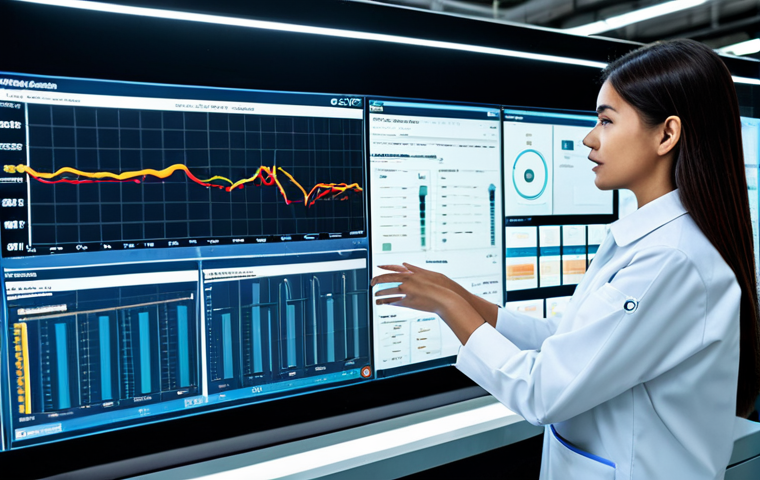
Walking through a truly modern factory floor, what you often don’t see, but what is absolutely everywhere, are the invisible threads of data being woven by an intricate network of smart sensors and the Internet of Things (IoT). It’s like the nervous system of the entire operation, constantly feeding vital information back to a central brain. I’ve personally witnessed how a seemingly minor vibration detected by a sensor on a massive milling machine can prevent a multi-million dollar breakdown days before it would have happened. This isn’t just about monitoring; it’s about anticipating, reacting, and continuously optimizing. Every piece of equipment, from the smallest motor to the largest robotic arm, is now equipped with these digital eyes and ears, silently whispering its status, performance, and even its stress levels to the overarching system. The sheer volume and velocity of this data stream are astonishing, transforming what used to be reactive maintenance into a proactive, intelligent strategy. It’s a complete game-changer when you can predict a failure with high accuracy and address it during scheduled downtime, rather than scrambling to fix it during an unexpected, costly outage. This constant, pervasive stream of real-time data is the fundamental bedrock upon which all advanced automation and AI applications are built.
1. Data Collection and Real-time Analytics
The core function of smart sensors in an automated factory is the relentless, precise collection of data. We’re talking about everything from temperature, pressure, vibration, and humidity to torque, speed, energy consumption, and even visual data from integrated cameras. This raw data, often in terabytes per day, is then funneled through sophisticated analytical platforms, often leveraging edge computing to process information closer to its source, reducing latency and bandwidth strain. My mind was genuinely blown when I saw how these analytics dashboards, often looking like something out of a sci-fi movie, could give operators an instant, granular view of the entire plant’s health. It’s not just numbers on a screen; it’s an immediate diagnostic tool that highlights anomalies and predicts trends. This real-time feedback loop allows for instantaneous adjustments to processes, ensuring optimal performance, minimizing waste, and maintaining peak operational efficiency. The ability to see exactly what’s happening, right now, across hundreds or even thousands of data points, is truly transformative for decision-making on the factory floor, moving from guesswork to data-driven certainty.
2. Network Infrastructure and Secure Connectivity
For all these sensors and devices to communicate effectively, a robust, secure, and highly reliable network infrastructure is absolutely paramount. We’re talking about industrial-grade Wi-Fi 6, 5G, and even dedicated low-latency wired connections ensuring that data packets flow smoothly and without interruption. The challenge here isn’t just speed; it’s also about security. Every connection point represents a potential vulnerability, making cybersecurity a non-negotiable priority. I’ve heard countless stories of companies investing heavily in their physical assets but underestimating the digital defenses required to protect their interconnected networks. Ensuring seamless, secure communication between machines, cloud platforms, and human operators is what truly unlocks the potential of IoT in manufacturing. Without this underlying digital backbone, the smart factory would simply crumble, unable to share the critical information that keeps it running like a well-oiled machine. It’s an invisible hero, often overlooked until it’s not there, but utterly essential for the modern plant.
Collaborative Robotics: Reshaping the Human-Machine Partnership
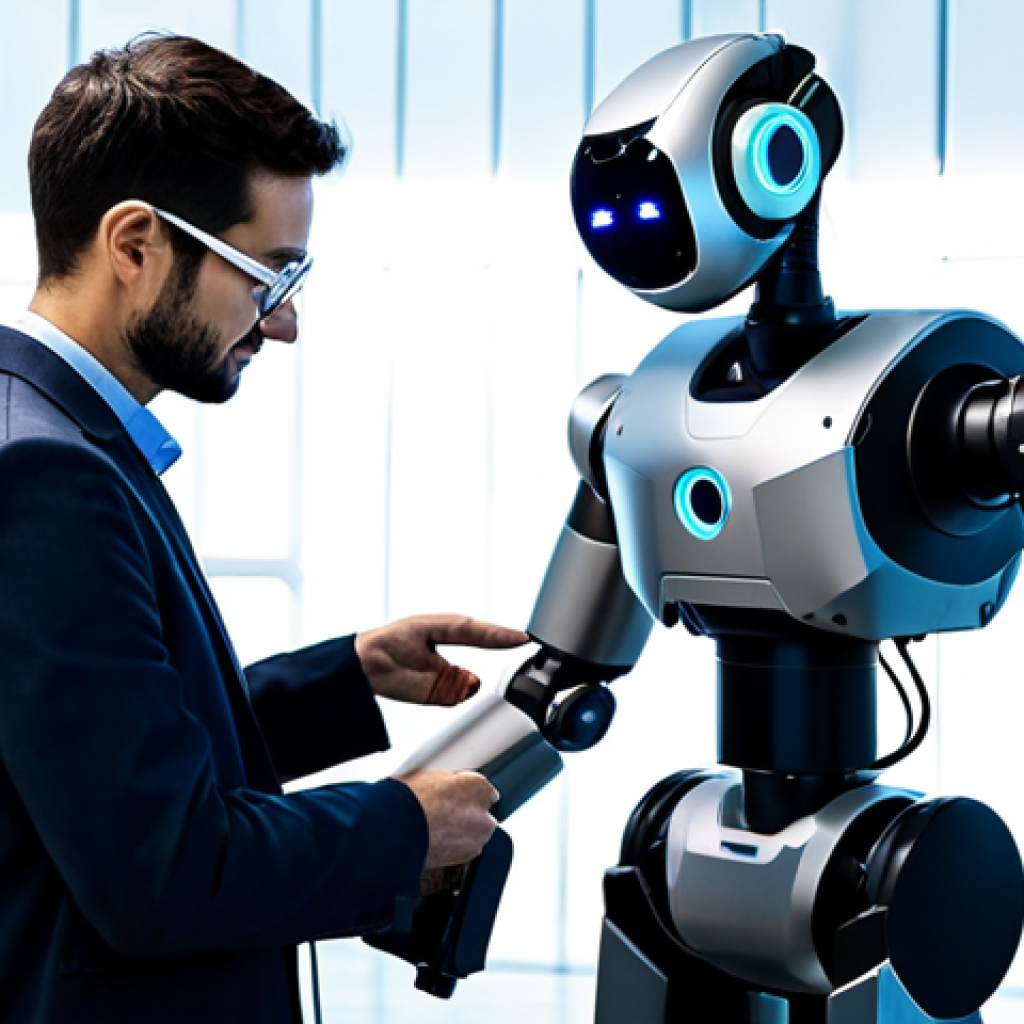
If you told me ten years ago that I’d see a robotic arm gently handing tools to a human worker, anticipating their next move, I probably would have chuckled and said, “Maybe in a sci-fi movie!” But that’s exactly what I’ve witnessed on several occasions with the rise of collaborative robots, or “cobots.” These aren’t the fenced-off, intimidating giants of old; they are smaller, more agile, and crucially, designed to work safely *alongside* humans. The first time I saw a cobot at work, it completely shifted my perspective on factory automation. There was a sense of fluid teamwork, almost like a dance partner, where the robot handled the repetitive, heavy, or dangerous tasks, freeing up the human to focus on intricate assembly, quality inspection, or problem-solving. This isn’t about replacing jobs wholesale; it’s about augmenting human capabilities, creating a more ergonomic and less fatiguing work environment, and crucially, boosting productivity and precision without compromising safety. It’s an exciting evolution, truly bringing the “human touch” back into a high-tech manufacturing setting, leveraging the best of both worlds.
| Cobot Type | Key Features | Common Applications | Benefits |
|---|---|---|---|
| Articulated Cobots | Multi-jointed arms, high flexibility, wide reach, often force-limited. | Assembly, material handling, machine tending, pick & place. | Versatility, easy programming, human interaction capability. |
| SCARA Cobots | Selective Compliance Assembly Robot Arm, high speed in X-Y plane, vertical stiffness. | Precision assembly, dispensing, packaging, inspection. | High speed, excellent repeatability, compact footprint. |
| Mobile Cobots (AMRs) | Autonomous Mobile Robots, navigate independently, transport materials. | Logistics, material transport between workstations, inventory management. | Increased throughput, reduced manual labor in transport, improved safety. |
| Delta Cobots | Parallel kinematics, high speed, lightweight, often mounted overhead. | High-speed picking and packaging, sorting, light assembly. | Extremely fast, precise movements, ideal for delicate items. |
1. Enhancing Human Capabilities, Not Replacing Them
What truly excites me about collaborative robots is their potential to elevate the human role on the factory floor. Imagine an operator no longer needing to lift heavy components all day, or perform the same monotonous screwing motion thousands of times. Instead, the cobot handles that physical burden, allowing the human to apply their unique cognitive skills – problem-solving, quality judgment, adaptability – to more value-added tasks. I’ve seen this firsthand: a worker who used to spend their entire shift loading parts onto a conveyor now supervises an entire cell, troubleshooting minor issues and ensuring overall flow, vastly improving job satisfaction and reducing repetitive strain injuries. This symbiotic relationship means that humans can be freed from the “3 D’s” – dull, dirty, and dangerous tasks – and focus on the “3 C’s” – creativity, critical thinking, and collaboration. It’s a powerful shift that creates safer, more engaging, and ultimately, more productive work environments. The skill sets required are evolving, emphasizing supervision, programming, and maintenance, making for richer, more dynamic careers.
2. Safety and Seamless Integration Challenges
While the benefits are clear, integrating cobots into an existing workflow isn’t without its challenges. The paramount concern is always safety. Unlike traditional industrial robots, cobots are designed with advanced sensors that detect human presence and react immediately by slowing down or stopping. However, the complexity of a dynamic work environment still requires careful risk assessments, thorough programming, and robust safety protocols. I’ve learned that successful integration relies heavily on thoughtful layout planning and ensuring that the cobot’s movements are predictable and non-threatening to its human counterparts. Beyond safety, there’s the challenge of seamless integration with existing IT infrastructure and manufacturing execution systems (MES). It’s not enough for the cobot to just “do its job”; it needs to report its progress, request materials, and communicate with other machines. Overcoming these integration hurdles requires a deep understanding of both robotics and information technology, ensuring that these clever machines become truly valuable team members rather than isolated, standalone tools.
The Digital Twin Revolution: Predicting Tomorrow, Today
The concept of a digital twin feels like something plucked straight from a high-tech thriller, but I’ve seen it in action, and it is profoundly real and impactful. Imagine having a perfect, living, breathing digital replica of your entire factory, a single machine, or even a specific product. Every sensor reading, every operational parameter, every stress point – all meticulously mirrored in a virtual environment. This isn’t just a static 3D model; it’s a dynamic, constantly updated simulation that behaves exactly like its physical counterpart. I recall a factory manager showing me how they used their digital twin to simulate a new production line layout before a single piece of equipment was moved. They identified bottlenecks, optimized material flow, and even trained operators in the virtual space, saving millions in potential rework and downtime. The sheer foresight this technology offers is simply staggering. It’s like having a crystal ball for your factory floor, allowing engineers and managers to test scenarios, predict failures, and optimize performance without ever touching the physical asset. This ability to experiment and learn in a risk-free virtual environment is fundamentally changing how products are designed, manufactured, and maintained, ushering in an era of unprecedented efficiency and reliability.
1. From Simulation to Predictive Maintenance
The journey of a digital twin often begins with detailed simulations. Engineers can run countless “what-if” scenarios, pushing the virtual machine or factory to its limits to understand its breaking points and optimal operating conditions. But where it truly gets powerful is when this simulation capability is combined with real-time data from the physical twin. This constant feedback loop means the digital twin isn’t just a model; it’s a living, evolving entity. It can detect minute deviations in performance that signal impending issues long before they manifest as critical failures. I’ve spoken with maintenance teams who were once constantly putting out fires but now, thanks to digital twins, can schedule interventions precisely when needed, during planned downtime. This shift from reactive to predictive maintenance is a game-changer, slashing repair costs, extending equipment lifespan, and dramatically increasing overall equipment effectiveness (OEE). It’s an almost magical feeling to watch a dashboard predict a bearing failure months in advance, allowing for a proactive replacement that prevents catastrophic, unscheduled downtime.
2. Real-World Impact and ROI
The business case for digital twins is compelling, delivering tangible returns on investment. Beyond predictive maintenance, digital twins are revolutionizing product design by allowing virtual prototyping and testing, significantly reducing the number of physical prototypes required. This accelerates time-to-market and slashes development costs. For existing operations, optimizing energy consumption, fine-tuning production parameters, and identifying inefficiencies become much simpler and more accurate when you have a perfect digital sandbox to play in. I’ve heard countless anecdotes from companies that have achieved double-digit percentage improvements in efficiency and throughput simply by leveraging insights from their digital twins. It’s also a powerful tool for workforce training, allowing new employees to learn complex machinery operations in a safe, simulated environment before stepping onto the factory floor. The ability to iterate quickly, learn from virtual failures, and optimize continuously translates directly into bottom-line benefits, proving that this futuristic technology is very much grounded in practical, economic reality.
AI-Powered Vision Systems: The Factory’s Sixth Sense
I used to think quality control was all about human eyes meticulously checking every product, and while human inspectors are still incredibly vital, what I’ve witnessed with AI-powered vision systems is just on another level of precision and speed. These aren’t just cameras; they are sophisticated imaging systems combined with artificial intelligence that can “see” and interpret the manufacturing process with an accuracy and consistency no human eye could ever match, especially not for an entire shift. It’s the factory’s new sixth sense, constantly vigilant, tirelessly inspecting every single component or assembly for flaws, misalignments, or defects that are often invisible to the naked eye. I was genuinely amazed watching an AI vision system flawlessly detect microscopic cracks on a component moving at high speed down a conveyor belt, something that would have been impossible for a human, even with magnification. This level of automated quality assurance is revolutionizing how manufacturers ensure their products meet the highest standards, minimizing costly recalls and maximizing customer satisfaction. It’s a massive leap forward from traditional machine vision, where rules had to be explicitly programmed; now, the AI *learns* what’s correct and what’s not, adapting as production evolves.
1. Quality Assurance and Defect Detection
The primary role of AI-powered vision systems in manufacturing is to ensure impeccable quality at every stage of production. From inspecting raw materials for imperfections to verifying the correct assembly of complex components, these systems perform tireless, objective evaluations. Unlike human inspectors who can experience fatigue, distraction, or subjective bias, AI vision systems maintain consistent performance 24/7. They can identify defects like surface scratches, missing parts, incorrect labeling, or even subtle color variations with incredible speed and accuracy. What’s even more impressive is their ability to learn from new data, continuously improving their detection capabilities over time. I recall a case where an AI system, after just a few weeks of operation, was able to identify a recurring defect pattern that human inspectors had consistently missed due to its subtlety. This proactive identification not only prevents faulty products from reaching the market but also provides valuable feedback to upstream processes, allowing manufacturers to pinpoint and rectify the root causes of issues much faster. It’s an indispensable guardian of product integrity and brand reputation.
2. Navigating Complex Assembly and Guidance
Beyond defect detection, AI vision systems are also playing a crucial role in guiding robots and automating complex assembly tasks. Imagine a robotic arm needing to pick up a component from a bin where parts are randomly oriented; traditional robots would struggle, but with AI vision, the robot can “see” the part’s position and orientation, adjust its gripper, and pick it up flawlessly. This capability, often referred to as “bin picking,” significantly enhances automation in previously intractable areas. I’ve observed these systems guiding welding robots to achieve perfect seams, or assembly robots precisely placing tiny components onto circuit boards with millimeter accuracy. They provide real-time spatial awareness, allowing robots to adapt to variations in parts or minor shifts in the work environment, making the entire assembly process far more flexible and resilient. This precise visual guidance minimizes errors, reduces waste, and dramatically increases the speed and efficiency of intricate manufacturing operations, unlocking new levels of automation that were once considered the exclusive domain of highly skilled human hands.
The Hyper-Automated Horizon and Our Evolving Roles
When we talk about “hyper-automation,” we’re moving beyond simply automating individual tasks. This is about an integrated, intelligent ecosystem where entire business processes, across departments and even supply chains, are seamlessly automated and, crucially, self-optimizing. It’s not just robots on the factory floor; it’s AI managing supply chain logistics, machine learning predicting demand fluctuations, and software bots handling administrative tasks. I’ve personally seen companies begin to stitch together disparate automated processes – from customer order entry to final product delivery – into a fluid, almost living organism. This profound shift naturally raises questions about the human workforce. It’s easy to feel a little apprehensive about this, perhaps even fear job displacement. However, what I’ve witnessed repeatedly is not job replacement, but job *transformation*. The focus shifts from repetitive, manual execution to strategic oversight, problem-solving, innovation, and managing these sophisticated automated systems. The factory of the future will still need brilliant minds, but their roles will be higher-level, more analytical, and significantly more engaging, requiring a commitment to continuous learning and adaptation. It’s a monumental change, requiring foresight and investment in human capital.
1. Beyond Basic Automation: A Symphony of Technologies
Hyper-automation isn’t a single technology; it’s a synergistic blend of advanced automation capabilities working in concert. We’re talking about Robotic Process Automation (RPA) handling routine administrative tasks, AI and machine learning for complex decision-making, intelligent business process management suites orchestrating workflows, and advanced analytics providing insights for continuous improvement. Imagine an order coming in, and an RPA bot automatically processes it, triggers a production order that’s optimized by AI based on current material availability and machine capacity, while a digital twin simulates the most efficient production path, and finally, an autonomous mobile robot delivers the finished goods to shipping. This interconnected, self-managing flow is the essence of hyper-automation. I’ve been fascinated by how these seemingly disparate technologies, when integrated correctly, create an exponential leap in efficiency and responsiveness that single-point solutions simply cannot achieve. It allows businesses to react to market shifts with unprecedented agility, minimizing human intervention in repetitive decision-making and freeing up valuable human resources for innovation.
2. Upskilling for the Future: A New Skillset Paradigm
The inevitable consequence and critical success factor of hyper-automation is the profound evolution of the workforce. The demand for purely manual labor in manufacturing will decrease, but the need for skilled technicians, data scientists, AI specialists, automation engineers, and critical thinkers will skyrocket. I can’t emphasize enough how vital reskilling and upskilling initiatives are for companies embracing this future. I’ve observed forward-thinking companies investing heavily in training programs, teaching their existing employees how to manage, program, and troubleshoot automated systems, or even how to interpret the vast amounts of data generated. It’s no longer just about operating a machine; it’s about understanding the underlying algorithms, ensuring data integrity, and optimizing the flow of information. The fear of being replaced often turns into excitement when employees realize they are being empowered with new, higher-value skills. This transformation means jobs will be more intellectually stimulating, requiring continuous learning and adaptability, but ultimately leading to more resilient and competent workforces capable of thriving in a hyper-automated world.
Navigating the Cybersecurity Labyrinth: Protecting the Connected Factory
The immense benefits of an interconnected, automated factory come with a significant, non-negotiable caveat: cybersecurity. Every sensor, every robot, every IoT device, and every network connection represents a potential entry point for malicious actors. It’s not just about protecting sensitive data; it’s about safeguarding physical operations, ensuring worker safety, and maintaining production continuity. I’ve personally experienced the palpable anxiety that ripples through an organization when a critical system is compromised, even if only for a short period. The interconnectedness that drives efficiency also expands the attack surface exponentially, making the modern manufacturing plant a prime target for everything from ransomware and industrial espionage to nation-state attacks. Protecting this digital fortress requires a multi-layered, proactive approach that treats cybersecurity not as an IT afterthought, but as an integral component of operational excellence and business resilience. The stakes are incredibly high; a single breach could lead to massive financial losses, reputational damage, and even physical harm if production lines are tampered with.
1. The Interconnected Threat Landscape
The threats facing smart factories are complex and constantly evolving. We’re talking about ransomware crippling entire production lines, intellectual property theft through compromised R&D networks, or even direct attacks on operational technology (OT) systems designed to disrupt or damage machinery. Unlike traditional IT security, where the primary concern might be data breaches, in an industrial setting, a cyberattack can have immediate physical consequences. I’ve heard chilling stories of plants being forced to shut down completely due to ransomware, losing millions of dollars per hour. The rise of interconnected supply chains also means that a vulnerability in one partner’s system can cascade and affect others. Furthermore, many legacy operational technologies weren’t designed with modern cybersecurity in mind, creating inherent weaknesses that must be addressed. It’s a landscape where the lines between IT (Information Technology) and OT (Operational Technology) security are blurring, demanding a converged strategy that protects both the digital assets and the physical processes from a wide array of sophisticated cyber threats.
2. Proactive Defense Strategies and Culture
Successfully defending a smart factory against cyber threats requires more than just installing firewalls. It demands a holistic, proactive strategy that includes robust network segmentation, continuous monitoring of both IT and OT networks, endpoint detection and response, and rigorous access controls. I’ve learned that a critical, often overlooked, element is human awareness and training. Employees, from the shop floor to the executive suite, are often the first line of defense – and sometimes, unfortunately, the weakest link through phishing or social engineering. Cultivating a strong cybersecurity culture, where every employee understands their role in protecting the organization, is paramount. Regular vulnerability assessments, penetration testing, and incident response planning are also non-negotiable. Furthermore, manufacturers are increasingly leveraging AI and machine learning themselves to detect anomalies and predict potential attacks, turning the very tools that enable the connected factory into its guardians. It’s an ongoing battle, but with the right mindset and investment, a secure and resilient automated future is entirely achievable.
Embracing Agility: Manufacturing in a Volatile World
The past few years have brutally highlighted one undeniable truth for manufacturers: the world is volatile, uncertain, complex, and ambiguous (VUCA). Supply chain disruptions, sudden shifts in consumer demand, and unforeseen global events can turn a meticulously planned production schedule into chaos overnight. This is where the true power of advanced manufacturing, underpinned by the technologies we’ve discussed, truly shines. It’s no longer just about efficiency at scale; it’s profoundly about agility, adaptability, and resilience. I’ve personally seen businesses flounder when they couldn’t pivot quickly enough, and conversely, those that thrived because their automated systems allowed them to reconfigure production lines almost on the fly, switch suppliers with minimal disruption, or rapidly scale up/down production. This ability to respond dynamically to external pressures is becoming the ultimate competitive advantage. The future belongs not just to the most efficient factories, but to the most intelligent and flexible ones – those capable of making rapid, data-driven decisions and executing swift changes, truly embodying what it means to be an adaptable enterprise in a constantly shifting global market. It’s an exciting, yet demanding, new paradigm for industry.
1. Rapid Adaptation and Customization
One of the most compelling aspects of intelligent automation is its capacity for rapid adaptation. Unlike traditional fixed automation that required lengthy and expensive retooling for product changes, modern flexible manufacturing systems, powered by collaborative robots and AI vision, can be reprogrammed and reconfigured far more quickly. This allows for mass customization, where products can be tailored to individual customer preferences without sacrificing efficiency. I’ve witnessed manufacturers producing small batches of highly customized goods at a speed and cost that would have been unimaginable a decade ago. This responsiveness is crucial for meeting evolving consumer tastes and capitalizing on niche markets. Furthermore, in the face of supply chain disruptions, this agility means a factory can quickly switch between different material suppliers or even adapt its product design to accommodate available components, ensuring continuity of production even when external conditions are challenging. It moves away from the rigid, ‘one-size-fits-all’ approach to a dynamic, ‘produce what’s needed, when it’s needed’ model.
2. Building Supply Chain Resilience Through Data
The interconnected nature of smart factories extends beyond their walls, integrating deeply with their supply chains. Real-time data from IoT sensors, combined with AI-driven analytics, provides unprecedented visibility into the entire supply network. I’ve spoken with procurement managers who now have dashboards showing them the precise location of every component, potential delays from suppliers, and even geopolitical risks that might impact delivery – all in real-time. This level of transparency and predictive insight allows businesses to identify and mitigate risks long before they escalate into major disruptions. It also enables them to optimize inventory levels, reducing holding costs while ensuring materials are always available. By leveraging this intelligence, companies can build truly resilient supply chains that can withstand shocks, adapt to unforeseen events, and maintain a steady flow of production. It’s about creating a robust, self-healing network that minimizes vulnerability and ensures continuous operation, even in the most turbulent of times.
Closing Thoughts
Having journeyed through the incredible evolution of modern manufacturing, from the sheer might of early robotics to today’s symphony of AI, IoT, and human-machine collaboration, it’s clear we’re not just building products anymore; we’re meticulously crafting intelligent ecosystems. The future of manufacturing isn’t a distant dream – it’s actively here, adapting, learning, and transforming industries globally. It’s about leveraging these profound technological advancements not just for efficiency, but to create businesses that are resilient, sustainable, and brilliantly capable of navigating any market storm. My deepest hope is that this exploration has offered you a comprehensive glimpse into the phenomenal potential and the exciting, sometimes daunting, challenges that lie ahead, empowering you to confidently embrace this smart, connected future.
Useful Information to Know
1. Invest in your people: Technology is only as good as the talent operating it. Prioritize upskilling and reskilling programs to ensure your workforce can adapt to new tools and higher-level roles.
2. Start small, think big: You don’t need to overhaul your entire factory overnight. Begin with pilot projects on a smaller scale to test concepts, gather real-world data, and demonstrate tangible ROI before scaling up your smart factory initiatives.
3. Cybersecurity is non-negotiable: From day one, embed robust cybersecurity measures into your smart factory strategy. Treat it as an operational imperative, not just an IT task, to protect your critical infrastructure and data.
4. Embrace data-driven decisions: The true power of smart manufacturing lies in leveraging real-time data for actionable insights. Build analytical capabilities and dashboards to move from reactive troubleshooting to proactive, predictive optimization.
5. Foster collaboration across departments: Breaking down silos between IT, Operational Technology (OT), production, and even HR is crucial. The integrated nature of smart factories demands a unified, cross-functional approach to implementation and management.
Key Takeaways
The journey into smart manufacturing highlights a profound paradigm shift: from isolated processes to an interconnected, intelligent ecosystem. At its core, this transformation is driven by a synergistic blend of technologies including IoT, AI-powered vision systems, collaborative robotics, and digital twins, which collectively enhance precision, boost efficiency, and revolutionize quality assurance. However, true success hinges equally on proactive cybersecurity measures, a commitment to continuously upskilling the workforce, and cultivating an agile mindset capable of rapid adaptation. Embracing these advancements isn’t merely about technological upgrades; it’s about building future-proof businesses that are inherently resilient, adaptable, and innovative in a perpetually evolving global landscape.
Frequently Asked Questions (FAQ) 📖
Q: What’s the biggest shift you’ve observed in manufacturing, beyond just bigger machines and more robots?
A: You know, it’s easy to look at a factory floor and just see more robotic arms, but honestly, the most profound shift for me has been the intelligence baked into everything.
It’s not about brute force or speed anymore. I mean, walking through one last year, I really felt the difference – it’s like the machines aren’t just doing tasks; they’re thinking and talking to each other.
The whole setup, from the AI-powered vision systems that can spot a micro-flaw faster than any human, to tiny IoT sensors whispering real-time data about every single component’s health, it’s all woven together.
And seeing collaborative robots, the cobots, working right next to people without a safety cage? That’s a game-changer. It’s less about the individual machine and more about this incredibly intricate, responsive ballet of technology.
It just feels smarter, more alive, if that makes sense.
Q: With all this incredible automation, what are some of the unexpected challenges or critical questions businesses are grappling with?
A: Oh, absolutely, it’s not all smooth sailing! While the efficiency gains are phenomenal, I’ve seen companies really wrestle with a couple of big things.
First, the workforce evolution is huge. It’s not about robots replacing people entirely, but rather redefining roles. You need to upskill folks to manage these complex systems, to understand the data, to troubleshoot a digital twin – it’s a whole new skillset.
This isn’t just about training; it’s about shifting mindsets, which can be tough. And then there’s cybersecurity – imagine your entire production line, your precious IP, connected to the internet.
That’s a massive attack surface! Companies are pouring millions into safeguarding against breaches, because a single ransomware attack could halt an entire global supply chain.
It’s a constant, high-stakes battle to stay ahead, balancing innovation with impenetrable security. Frankly, it keeps a lot of executives up at night.
Q: For companies looking to embark on this journey towards hyper-automation, what are the fundamental “building blocks” they really need to focus on first?
A: That’s a brilliant question because it can feel overwhelming, right? Like, where do you even start? From what I’ve seen, it’s less about buying the flashiest new robot and more about laying a solid, foundational data infrastructure.
You need to focus on truly integrated systems – not just buying disparate pieces of hardware. Think of it as building a smart home; you wouldn’t just buy a smart bulb and call it done.
You need a hub, a network, and a way for everything to communicate seamlessly. For a factory, that means investing in robust IoT sensor networks that actually talk to each other, powerful AI analytics platforms to make sense of all that data, and, crucially, the software that can orchestrate all of it.
It’s about designing an ecosystem where precise engineering meets cutting-edge software, where data flows freely and intelligently. Without those fundamental, interconnected building blocks, you’re just buying expensive toys, not building a resilient, intelligent future.
You really have to think holistically from day one.
📚 References
Wikipedia Encyclopedia
구글 검색 결과
구글 검색 결과
구글 검색 결과
구글 검색 결과
구글 검색 결과