Industrial sensors are the unsung heroes of modern automation, quietly powering everything from smart factories to sophisticated robotics. With the rapid evolution of Industry 4.0, choosing and installing the right sensor has become more critical and complex than ever.
I’ve personally seen how a small oversight in sensor selection can lead to costly downtime or inaccurate data, really impacting a company’s bottom line and even safety.
It’s not just about picking a device; it’s about understanding the specific demands of your environment, the nuances of different sensor types, and how to integrate them seamlessly into your existing systems to truly leverage real-time data and predictive maintenance.
Trust me, getting this right can transform your operations, boosting efficiency and reliability in ways you might not expect. Let’s dive deeper and make sure you get it exactly right for your industrial needs.
Cracking the Code: What Your Factory Really Needs from a Sensor

You know, it’s easy to get lost in the sheer volume of sensor options out there. I remember one time, early in my career, I was tasked with upgrading a small manufacturing line.
I just dove into spec sheets, comparing numbers, thinking the highest resolution or fastest response time was always the winner. Boy, was I wrong! I ended up with sensors that were overkill for the task, leading to unnecessary costs and even compatibility issues with existing PLCs.
What I learned the hard way, and what I want to share with you, is that the first step isn’t about the sensor itself, but about a deep, honest look at your actual operational demands.
It’s about asking the tough questions: What exactly are we measuring? What’s the environment like – hot, cold, dusty, wet? What kind of precision is truly critical versus what’s just “nice to have”?
Understanding these core requirements will save you so much grief and money down the line. It’s like building a house; you wouldn’t just pick the fanciest bricks without knowing the foundation or local climate, right?
This initial deep dive into your application environment is arguably the most crucial part of the whole process, dictating everything from sensor type to connectivity.
Getting this wrong can lead to constant recalibrations, premature sensor failure, and a data stream that’s more noise than signal. Trust me, I’ve been there, and it’s a frustrating cycle.
Defining Your Operational Sweet Spot
Before you even glance at a product catalog, sit down with your team – engineers, operators, maintenance staff – and map out the exact conditions. Think about the extremes: the highest temperatures, the lowest, the dustiest periods, the most humid days.
Is there vibration? Are there corrosive chemicals in the air? I once worked on a food processing plant where overlooking the cleaning chemicals used daily meant sensors failed within months, despite being “industrial grade.” We had to switch to specialized IP69K rated stainless steel units, a change that could have been avoided with a more thorough upfront assessment.
It’s not just about the static environment, but also the dynamic processes and the potential for unexpected challenges. Consider the material being handled: is it abrasive?
Is it sticky? These seemingly small details can have a massive impact on sensor longevity and accuracy.
Understanding Data Needs and System Compatibility
It’s not enough to just measure; you need to know what you’re going to *do* with that measurement. Do you need real-time feedback for immediate control, or is periodic logging sufficient for trend analysis?
What’s your existing control system? Is it an older PLC that only speaks Modbus, or a newer IoT platform looking for MQTT streams? I’ve seen projects grind to a halt because a brand-new, cutting-edge sensor couldn’t communicate with the legacy machinery it was supposed to monitor.
It’s a classic case of technological dissonance. You might have the best data in the world, but if your systems can’t understand it, it’s just digital noise.
Think about the output signal type – analog (4-20mA, 0-10V), digital (PNP, NPN), or fieldbus protocols like Profibus, EtherCAT, or even wireless standards.
Making sure your new sensors seamlessly integrate with your existing infrastructure is paramount for a smooth rollout and avoiding costly middleware or gateway solutions.
Beyond the Brochure: Evaluating Sensor Performance in the Real World
Picking a sensor based solely on its specifications sheet is like choosing a car based only on its horsepower – you’re missing so much of the picture.
I’ve been burned by this more times than I care to admit. Those pristine lab conditions where manufacturers test their sensors rarely, if ever, mirror the messy, unpredictable realities of a factory floor.
You need to think about how robust a sensor truly is, not just on paper, but when it’s subjected to the relentless grind of daily operations. I always try to get my hands on a demo unit if possible, even if it’s just for a few days, to run it through its paces in our actual environment.
It’s like test driving a car; you’ll learn so much more than just reading the brochure. This “real-world performance” isn’t just about accuracy, it’s about reliability, repeatability, and how it handles those inevitable spikes and dips in your process.
It’s the difference between a system that hums along smoothly and one that constantly needs tweaking or, worse, breaks down at the most inconvenient times.
My rule of thumb: if a sensor can survive a week in the wild without a hiccup, it’s probably a solid contender.
Durability and Environmental Resilience
Industrial environments are harsh, let’s be honest. Dust, humidity, temperature fluctuations, vibrations, electromagnetic interference – these are all par for the course.
Your sensor needs to be a trooper. I remember installing some cheaper sensors in a sawmill only to find their plastic casings cracking and optics clouding over within months due to sawdust and moisture.
We ended up replacing them with rugged, sealed metal-bodied sensors, which, while more expensive upfront, saved us a fortune in replacement costs and downtime.
Look for appropriate IP ratings (Ingress Protection), shock and vibration resistance, and chemical compatibility. Sometimes, a seemingly minor detail, like the material of the cable jacket, can make all the difference in a corrosive environment.
It’s about building a fortress around your data collection points.
Accuracy, Repeatability, and Long-Term Stability
While absolute accuracy is important, for many applications, repeatability is king. If your sensor consistently gives you the same reading under the same conditions, even if it’s slightly off from a perfect measurement, your control system can often compensate.
What kills a process is erratic behavior – readings that jump all over the place. I once dealt with a pressure sensor that, while accurate when new, drifted significantly over time, leading to inconsistent product quality.
We had to implement a rigorous, frequent calibration schedule just to keep things in line, which was a huge drain on resources. Always ask about drift specifications and recommended calibration intervals.
A sensor that needs constant babying isn’t saving you money, it’s costing you.
Seamless Integration: Making Your New Sensors Part of the Team
Okay, you’ve picked the perfect sensor. High five! But that’s only half the battle.
Now comes the trickier part: integrating it into your existing industrial nervous system without causing a major headache. I’ve personally seen installations go sideways because someone forgot to account for mounting space, cable routing, or worse, overlooked the specific power requirements of a new device.
It’s like buying a fantastic new engine for your car but forgetting that it doesn’t fit in the engine bay or requires a different type of fuel. The best sensor in the world is useless if it can’t talk to your PLC or fit physically into your setup.
This is where meticulous planning and a little bit of foresight really pay off. You want this process to be as smooth as possible, minimizing downtime and maximizing the new sensor’s impact from day one.
Physical Installation Challenges and Solutions
Mounting location, physical space constraints, and environmental factors all play a massive role here. Are you replacing an old sensor or adding a new measurement point?
If replacing, can you use the existing mounting hardware or will you need adapters? If adding, where’s the best spot to ensure accurate readings without interfering with operations or being exposed to damage?
I once had to get creative with custom-fabricated brackets because the new proximity sensors we chose were slightly larger than their predecessors. It added a day to the installation, but it was far better than trying to force a fit or compromise the sensor’s performance.
Also, think about accessibility for maintenance and future calibration. You don’t want to need a cherry picker and an act of Congress just to clean a sensor lens.
Connectivity, Wiring, and Communication Protocols
Wiring can be surprisingly complex. You need to consider cable length, shielding to prevent electrical noise, and proper termination. Are your existing cables compatible, or do you need to run new ones?
For wireless sensors, what’s the signal strength like in the desired location, and are there any potential interference sources? I once spent hours troubleshooting a new flow meter only to discover a poorly shielded cable was picking up noise from a nearby motor drive, scrambling the signal.
Communication protocols are another beast. Ensure your sensor’s output (e.g., analog, digital, serial, Ethernet/IP, Profinet) is directly compatible with your control system’s input.
Sometimes a simple I/O module can bridge the gap, but always plan for it.
Future-Proofing Your Factory: Investing in Smart Sensor Technology
Let’s face it, technology moves fast, and industrial automation is no exception. What seems cutting-edge today could be standard, or even outdated, tomorrow.
When I’m looking at new sensor installations now, I’m not just thinking about current needs, but about where we want to be in five, ten years. It’s about making choices today that will allow for easier upgrades, more sophisticated data analysis, and seamless integration with emerging technologies down the line.
We’re talking about smart sensors, the kind that don’t just measure, but can think, communicate, and even self-diagnose. Investing a little extra upfront in these intelligent devices can seriously pay dividends by extending the lifespan of your system and making it far more adaptable to future advancements.
Embracing Intelligent and Communicative Sensors
Modern industrial sensors aren’t just dumb measuring devices anymore; many are becoming incredibly smart. They can have onboard processing, memory, and advanced communication capabilities.
Think about sensors that can perform their own signal conditioning, filter out noise, or even self-calibrate to a degree. I’ve been really impressed with the latest generation of IO-Link enabled sensors.
They simplify wiring, allow for remote configuration, and provide rich diagnostic data that traditional sensors just can’t. This kind of intelligence means less time spent manually configuring devices and more valuable data flowing directly to your control system or even the cloud.
It’s a game-changer for predictive maintenance and condition monitoring.
Scalability and Data Analytics Readiness
When you choose a sensor, think about its role in your larger data ecosystem. Can it easily integrate with your existing SCADA system, MES, or even cloud-based analytics platforms?
Does it provide enough data resolution and frequency to support advanced analytics for predictive maintenance or process optimization? I remember an instance where a company invested heavily in vibration sensors, but the chosen sensors only provided basic alarm signals.
When they later wanted to implement sophisticated machine learning algorithms to predict failures, they realized they needed much richer, raw vibration data, essentially making their initial investment less effective.
Look for sensors that offer configurable data output and standardized communication interfaces to ensure future compatibility.
| Sensor Type | Common Use Cases | Key Benefits | Typical Challenges |
|---|---|---|---|
| Proximity Sensors | Object detection, position sensing, counting | High speed, non-contact, robust | Limited range, material dependence (inductive/capacitive) |
| Photoelectric Sensors | Presence detection, sorting, level sensing | Versatile, long range, detects various materials | Affected by dirt/dust, alignment critical |
| Temperature Sensors | Process control, climate monitoring, safety | High accuracy, wide range, critical for quality | Response time, calibration drift, mounting location |
| Pressure Sensors | Fluid levels, flow monitoring, system pressure | Reliable, precise, essential for safety | Calibration, media compatibility, pulsation effects |
| Vision Systems | Quality inspection, robot guidance, sorting | High precision, complex analysis, flexible | Lighting sensitivity, programming complexity, cost |
Troubleshooting Common Sensor Headaches (and How I Solve Them)
Let’s be real, even with the best planning, sensors can be finicky. I’ve spent countless hours staring at blinking lights and puzzling over inexplicable data readings.
It’s part of the game, right? But over the years, I’ve developed a sort of sixth sense for common sensor problems and a toolkit of tricks to get them back online.
It’s never fun when a critical sensor goes down, bringing a whole line to a halt. My philosophy is to approach troubleshooting systematically, starting with the most obvious culprits and working my way through the layers.
It’s like being a detective, gathering clues and eliminating possibilities until you pinpoint the real issue. Trust me, a little patience and a methodical approach can save you a ton of frustration and downtime.
Power and Connectivity Checks
Before you dive deep into complex diagnostics, always start with the basics. Is the sensor getting power? Is the cable connected securely?
I know, it sounds ridiculously simple, but you’d be surprised how many “sensor failures” turn out to be a loose wire or a tripped circuit breaker. Check for voltage at the sensor terminals.
Are there any indicator LEDs on the sensor itself? Many modern sensors have status lights that can tell you a lot – green for power, yellow for output, red for fault.
I’ve seen cases where a sensor was perfectly fine, but a nearby cable had been snagged or chewed by rodents, causing an intermittent connection. Don’t overlook the simple stuff; it’s often the solution.
Environmental Interference and Sensor Calibration
Once power and connections are confirmed, look at the environment. Is something blocking the sensor’s view? Is there excessive dust or moisture on the lens or sensing surface?
For proximity sensors, is the target material or distance still within specification? I vividly recall a situation where a photoelectric sensor was giving intermittent readings in a packaging plant.
After hours of head-scratching, we found a small, almost invisible film of lubricant mist had accumulated on its lens, scattering the light beam. A quick wipe and it was good as new!
Calibration drift is another common issue, especially with analog sensors. Regular calibration checks against a known standard are crucial to ensure your readings remain accurate over time.
Boosting Your Bottom Line: The ROI of Smart Sensing

Let’s talk money, because at the end of the day, every investment in your factory needs to make financial sense. Industrial sensors aren’t just fancy gadgets; they’re powerful tools that can directly impact your profitability, sometimes in ways you might not immediately expect.
I’ve personally seen how a well-placed sensor, collecting the right data, can transform a struggling production line into a highly efficient, cost-saving powerhouse.
It’s not just about avoiding downtime; it’s about optimizing processes, reducing waste, improving product quality, and even enhancing worker safety. When you look at the bigger picture, the return on investment for smart sensing can be truly astounding, far outweighing the initial capital expenditure.
Optimizing Processes and Reducing Waste
One of the most immediate benefits of intelligent sensing is the ability to fine-tune your operations. Real-time data from flow, pressure, and temperature sensors can help you identify inefficiencies, such as over-pressurization in a pneumatic system or excessive heating in a curing oven.
I worked with a client who installed intelligent flow sensors on their cooling lines. By precisely monitoring and adjusting flow rates based on demand, they were able to reduce their energy consumption by 15% in that area alone, just by avoiding unnecessary pumping.
That’s a direct saving that hits the bottom line every single day. Less waste, less energy consumption, higher throughput – these are all tangible benefits that accumulate rapidly.
Predictive Maintenance: Saving Money Before Things Break
This is where smart sensors really shine. Instead of waiting for a motor to fail catastrophically (and expensively), vibration and temperature sensors can give you early warning signs of impending issues.
I’ve been involved in projects where predictive maintenance, powered by sensor data, prevented millions of dollars in potential downtime and repair costs.
Imagine knowing a bearing is about to fail weeks in advance, allowing you to schedule maintenance during planned downtime, rather than reacting to an emergency.
It transforms maintenance from a reactive, costly affair into a proactive, cost-controlled strategy. This isn’t just theory; it’s a proven method to extend asset life and dramatically reduce unplanned outages.
The Human Touch: Why Sensor Intuition Still Counts
Even with all the amazing advancements in sensor technology and AI, there’s still an invaluable role for human intuition and experience on the factory floor.
I’ve been in this industry long enough to know that data alone, no matter how precise, can’t tell the whole story. Operators and technicians who spend their days interacting with the machinery develop a kind of sixth sense – they hear the subtle changes in machine hum, feel the unusual vibrations, or even smell something “off.” It’s these human observations, combined with sensor data, that create the most robust and reliable systems.
Relying solely on automated alerts can sometimes lead you down the wrong path; the real magic happens when you blend technology with seasoned human insight.
Empowering Operators with Better Data
Instead of replacing human observation, smart sensors should empower it. Providing operators with real-time, easily digestible data allows them to make more informed decisions.
Imagine an operator seeing a slight, consistent increase in motor temperature trends on a display, confirming their gut feeling that something isn’t right, even before an alarm threshold is crossed.
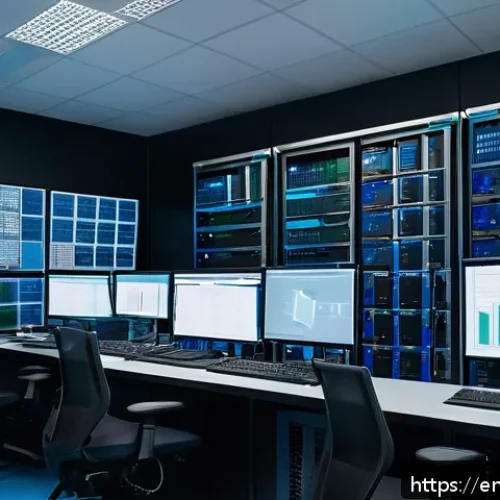
I helped implement a system in a plant where critical process parameters were displayed on large screens for all operators to see. This not only improved awareness but fostered a sense of ownership, as operators could directly see the impact of their adjustments and respond proactively to subtle deviations indicated by the sensors.
It creates a powerful feedback loop.
Learning from Unexpected Sensor Behavior
Sometimes, a sensor will show something completely unexpected, something that doesn’t quite fit the model or the historical data. These aren’t always errors; they can be opportunities for discovery.
I once had a new level sensor in a tank give us readings that seemed slightly off compared to our older method. Instead of just recalibrating or replacing it, we investigated further.
It turned out the new sensor was so precise that it was picking up a slight, previously unnoticed oscillation in the tank’s contents due to a subtle pump pulsation.
We adjusted the pump’s frequency, not only getting more stable readings but also reducing wear on the pump itself. These “anomalies” are often goldmines for deeper process understanding and improvement, if you’re willing to dig a little.
Wrapping Things Up
Whew! We’ve covered a lot of ground today, haven’t we? From the initial glimmer of an idea to the nuts and bolts of integration and future-proofing, choosing the right industrial sensor is clearly more than just a quick pick from a catalog. It’s a strategic decision that can genuinely make or break your operational efficiency and, let’s be honest, your sanity. What I’ve really tried to convey here is that it’s a journey best taken with a clear understanding of your environment, your data needs, and a healthy dose of practical experience. Marrying cutting-edge technology with the invaluable intuition of your human team? That’s where the real magic happens, transforming your factory from just a collection of machines into a truly smart, responsive, and profitable ecosystem. It’s an ongoing process of learning, tweaking, and evolving, but with these insights, I’m confident you’ll be well on your way to success.
Useful Information to Know
1. The Power of “Why”: Always Start with the Application
Before even thinking about sensor types, always, *always* define your application in excruciating detail. What precisely are you measuring? What’s the range? What are the environmental stressors – temperature, humidity, vibration, chemicals, dust? What’s the physical space like? I’ve seen countless projects get derailed because someone picked a sensor that was technically brilliant but completely unsuitable for the specific real-world conditions. For example, selecting a sensor with an appropriate measuring range directly corresponds with obtaining accurate readings and an optimum sensor lifespan. Knowing these nuances upfront is your strongest defense against costly mistakes and ensures you select a sensor that’s truly a workhorse, not a delicate flower.
2. Don’t Skimp on Connectivity and Integration Planning
A fantastic sensor is only as good as its ability to communicate. Seriously, I can’t stress this enough. When you’re eyeing a new sensor, spend just as much time, if not more, understanding how it will shake hands with your existing control system. Are we talking analog outputs, digital signals, or a sophisticated fieldbus protocol like PROFINET or EtherCAT? Ignoring this can lead to middleware nightmares, unexpected rewiring, and a major blow to your project timeline and budget. Modern sensors often offer IO-Link, which simplifies wiring and allows for remote configuration, making life so much easier. Consider it a critical part of your initial due diligence.
3. Regular Maintenance is Your Best Friend (and Money Saver)
It’s easy to set it and forget it, but industrial sensors, especially those in harsh environments, need love. Regular cleaning, calibration, and inspection of electrical connections are non-negotiable. Dust, dirt, moisture, and even slight physical shifts can degrade performance over time, leading to inaccurate readings and potential system failures. I once learned this the hard way with a pressure sensor that started giving erratic readings due to slight corrosion on its terminals – a simple cleaning and re-tightening solved what initially looked like a major fault. Proactive maintenance truly extends lifespan and prevents costly, unexpected downtime.
4. Embrace Smart Sensors and AI for Future-Proofing
The industrial landscape is evolving at lightning speed, with Industry 4.0 and smart manufacturing leading the charge. Investing in intelligent, communicative sensors now will pay dividends later. Think sensors with embedded diagnostics, self-calibration capabilities, and robust communication protocols. Paired with AI and machine learning, these devices can enable true predictive maintenance, optimizing processes and reducing unplanned downtime by a significant margin. This isn’t just about collecting data; it’s about turning that data into actionable insights that drive real business value and competitive advantage.
5. The Human Element Remains Irreplaceable
Even with the smartest sensors and most advanced AI, the seasoned eye and ear of an experienced operator or technician are still invaluable. They often detect subtle anomalies that data alone might miss, or provide context to unexpected readings. Encourage a culture where human observation complements sensor data. Providing operators with easily digestible, real-time data from sensors can empower them to make more informed decisions, fostering a deeper understanding of the processes they manage. It’s the powerful synergy between human intuition and technological precision that truly unlocks a factory’s full potential.
Key Takeaways
Choosing and deploying industrial sensors successfully boils down to a few core principles that I’ve seen hold true time and time again. First, truly understand your application’s specific demands and environmental conditions before you even look at a datasheet. This upfront diligence is your primary shield against missteps. Second, meticulously plan for seamless integration with your existing control systems and prioritize robust connectivity, as a sensor’s data is useless if it can’t be communicated effectively. Third, remember that consistent, proactive maintenance—cleaning, calibration, and regular checks—is essential for long-term accuracy and preventing unexpected downtime. Lastly, look towards the future by considering smart, AI-ready sensors. These aren’t just gadgets; they’re investments that empower predictive maintenance, process optimization, and ultimately, a healthier bottom line. The sweet spot for industrial success lies in combining cutting-edge sensor technology with the irreplaceable wisdom and continuous engagement of your human workforce.
Frequently Asked Questions (FAQ) 📖
Q: With so many industrial sensors out there, how can I be sure I’m picking the absolute best one for my specific operation?
A: Oh, I totally get it! Walking into a trade show or browsing catalogs can feel like staring at a massive menu when you’re just trying to pick a sandwich.
It’s daunting, right? From what I’ve seen, the biggest mistake people make is looking at the sensor first. Instead, flip that around!
Start with your process. Ask yourself: “What exactly do I need to measure?” Is it temperature, pressure, proximity, or something else entirely? Then, dive deep into the environment where it’ll live.
Is it dusty, wet, extremely hot or cold, or prone to vibrations? Believe me, a sensor that thrives in a clean room will probably crumble in a foundry.
Next, consider the precision and speed you require. Are we talking about a general range or pinpoint accuracy? Does the reading need to be instantaneous, or can it have a slight delay?
I’ve personally found that taking the time to thoroughly map out these operational requirements upfront saves a ton of headaches (and money!) down the line.
Don’t be shy about reaching out to manufacturers; they often have application engineers who can guide you through their specific product lines. It’s about finding the right tool for your job, not just the fanciest new gadget.
Q: I’m always worried about integration headaches. What are the common pitfalls I should definitely try to avoid when setting up new industrial sensors?
A: That’s a super valid concern! Integration can feel like a complicated puzzle, and frankly, it often is. I’ve seen firsthand how a brilliant sensor can become utterly useless if it’s not properly integrated.
One of the biggest blunders is ignoring compatibility. You wouldn’t try to plug a square peg into a round hole, but sometimes, folks overlook whether their new sensor ‘speaks the same language’ (like Modbus, EtherNet/IP, or IO-Link) as their existing control system.
Another huge one is skimping on calibration and testing. It’s easy to assume a brand-new sensor is perfectly accurate out of the box, but believe me, a few hours spent on proper calibration and thorough testing in its actual operating conditions can prevent weeks of troubleshooting later.
I once saw a company chase phantom issues for days just to find a sensor was off by a tiny fraction. Lastly, don’t underestimate the importance of data infrastructure.
You’re collecting all this amazing real-time data, but where’s it going? Is your network robust enough? Do you have the right software to process and visualize it?
Think of it like a highway; if you build a super-fast car but the roads are terrible, you’re not going to get anywhere fast. Proper planning, robust testing, and ensuring your data has a clear path are your best friends here.
Q: Beyond just collecting data, what are the tangible, game-changing benefits I can really expect from investing in advanced industrial sensors?
A: Oh, this is where it gets exciting! While data collection is the foundation, the true magic happens when you leverage that data. The way I see it, the most game-changing benefit is predictive maintenance.
Instead of waiting for a machine to break down (and trust me, it always happens at the worst possible time!), advanced sensors can tell you when a component is likely to fail.
This allows you to schedule maintenance proactively during planned downtime, drastically reducing unexpected outages and saving a fortune in emergency repairs.
I’ve heard stories of companies saving millions a year just by moving from reactive to predictive maintenance. Then there’s optimized resource consumption.
Sensors can monitor energy usage, material flow, and even air quality, allowing you to fine-tune processes to minimize waste and maximize efficiency. Think about cutting electricity bills or reducing scrap material – it adds up fast!
And let’s not forget enhanced safety. Early detection of anomalies like overheating components or abnormal vibrations can prevent catastrophic failures, protecting both your equipment and your invaluable team.
Ultimately, these aren’t just incremental improvements; they’re foundational shifts that boost your bottom line, improve operational resilience, and give you a genuine competitive edge.
It’s truly transformative!